Key takeaways
- A urine culture names the exact organism behind a UTI and tests which drugs work against it; the routine urine test only spots inflammation.
- Give the sample before your first antibiotic dose, or the plate may grow nothing.
- A clean-catch midstream sample, collected exactly as instructed, decides the quality of the whole result.
- 100,000 CFU/mL is the classic significance cutoff, but symptoms, specimen type and your lab's own range shape the interpretation.
- Mixed growth of several organisms usually means contamination: repeat the collection, don't treat the report.
- Bacteria without symptoms usually need no treatment, with pregnancy as the major exception.
- Results take two to three days: about a day for the culture, another for the sensitivity pattern.
Book tests from this article
Sample collected at home - free
- Urine C/S
₹1,149₹1,49923% off
- Urine Routine & Microscopic Examination
₹299₹64954% off
- Urine Complete
₹349₹49930% off
Free collection 24 hr reports
What a urine culture actually answers
A routine urine test is fast. You hand over the sample, and within minutes the dipstick can say there are white blood cells in it, maybe nitrites, maybe a little blood. All of that points one way: something is irritating your urinary tract, and infection is the most likely culprit.
A urine culture is slower, and it answers a different question. Instead of asking "does this look like infection?", it asks two much more specific things. First: exactly which organism is growing in this urine, and in what numbers? Second: which drugs does that organism respond to, and which does it shrug off?
That difference is the whole point. The dipstick tells your doctor a UTI is likely. The urine culture and sensitivity test names the suspect and hands over its weak points. Most of the time the suspect is Escherichia coli, the gut bacterium behind roughly 80% of uncomplicated community-acquired UTIs. That figure has held up across a 17-country European survey and several hospital series since. But "most of the time" is not "always", and the rest of the lineup matters: Staphylococcus saprophyticus (common in younger women), Klebsiella, Proteus, Enterococcus, Pseudomonas, and occasionally Candida, a yeast that behaves like a bacterial infection but isn't one. Each of them responds to a different set of drugs. The culture is how the lab tells them apart.
One thing the culture cannot do: it cannot diagnose a UTI on its own. A number on a report means something only alongside your symptoms, your history, and how the sample was collected. Keep that in mind for everything that follows, because almost every confusing urine culture report makes sense once you look at those three together.
Who gets asked for one, and who doesn't need it
Not every suspected UTI needs a culture. When a woman walks in with the classic picture, burning when she passes urine, going every twenty minutes, an ache low in the belly, and no vaginal symptoms, many doctors treat on the spot without ordering any lab test at all. Cleveland Clinic's diagnostic stewardship guidance backs this: with that exact symptom set, the probability of a UTI is high enough that testing adds little.
So when does the culture order come out? Usually in situations where guessing would be risky or has already failed:
- The infection keeps coming back. Recurrent UTIs get cultured because the organism, or its drug pattern, may have changed since last time.
- Treatment didn't work. If symptoms persist after the first course, the doctor needs to know whether the wrong drug was picked.
- You're pregnant. Guidelines recommend screening for bacteria in urine during pregnancy, because an untreated infection can travel upward and cause kidney infection, which raises the risk of early labour.
- The patient is a man or a child. UTIs are less common in both, so a first one gets investigated more carefully.
- Something complicates the picture: a urinary catheter, diabetes, kidney stones, a known urinary tract abnormality, or symptoms that suggest the infection has reached the kidneys (fever, back or flank pain, vomiting).
- Before certain urologic procedures where bleeding is expected, so any bacteria can be cleared in advance.
- With a urinary catheter in place. Catheter-associated infections behave differently: bacteria form biofilms on the catheter surface, the usual colony-count cutoffs shift downward, and the sample should ideally be taken from a freshly placed catheter rather than the drainage bag, where urine has been sitting and growing things that were never in the bladder.
If your doctor skipped the culture and treated directly, that's not a shortcut or a sign of a careless clinic. It's the standard approach for a straightforward first episode.
Give the sample BEFORE the first antibiotic dose
This is the single most important timing rule in the whole process, and it's the one people most often get wrong.
Antibiotics start killing bacteria fast. If you swallow the first dose and then give your urine sample the next morning, the culture plate may grow nothing at all. The report will say "no growth", and everyone will feel relieved, while the infection is still sitting in your bladder, partially suppressed and waiting. A falsely quiet culture is worse than no culture, because it can convince your doctor the problem is solved when it isn't.
The rule is simple: the sample comes first, the tablet after. Give the urine, then start the medication. If you've already taken a dose, don't panic and don't skip the test. Tell the doctor and tell the lab exactly when you took it. A good lab notes "sample collected after antibiotic started" on the report, and your doctor reads the result with that in mind. Honesty about timing is more useful than a perfect sample given too late.
The clean-catch: an honest walkthrough
Here's the part nobody explains properly: the quality of your urine culture is decided in the bathroom, not in the lab. Skin, especially around the urethral opening, carries its own bacteria. If those hitchhikers land in the cup, they grow on the plate too, and the lab can't easily tell them apart from the real infection. The clean-catch method exists to keep them out.
MedlinePlus lays out the steps, and they work, though the first attempt always feels awkward:
Wash your hands with soap and water and dry them. Open the sterile container without touching the inside of the lid or the cup. The lab gives you antiseptic wipes: women separate the labia and wipe from front to back, first the inner folds, then over the urethral opening; men wipe the head of the penis, retracting the foreskin first if needed.
Then the part everyone fumbles: start urinating into the toilet, stop the flow, and bring the cup into the stream for the middle portion. Hold it a few inches away from your body so it doesn't touch skin. Fill it about a third to half full, an ounce or two is plenty, and finish in the toilet. Cap it firmly and hand it in.
Why the middle? The first splash of urine flushes out the bacteria and skin cells sitting at the opening of the urethra. Catching the middle stream gives you urine that came straight from the bladder, which is the part the lab actually wants to test.
A first-morning sample, or urine that has sat in the bladder for two to three hours, is slightly better because bacteria have had time to multiply. But a fresh sample given now always beats a perfect sample delayed until after your first antibiotic dose. And once collected, the clock starts: if the sample can't reach the lab within about an hour, refrigerate it. At room temperature, bacteria keep multiplying in the cup, and a two-hour-old sample can look far more infected than your bladder actually is.
If you're on your period, tell the lab before you collect. Menstrual blood in the sample complicates the reading. The lab can usually still work with it, but they need to know. With home collection, our phlebotomists carry the sterile cup and wipes to your doorstep across Malad, Kandivali, Borivali and Goregaon, and the same rules apply on your own bathroom floor.
What your cup does inside the lab
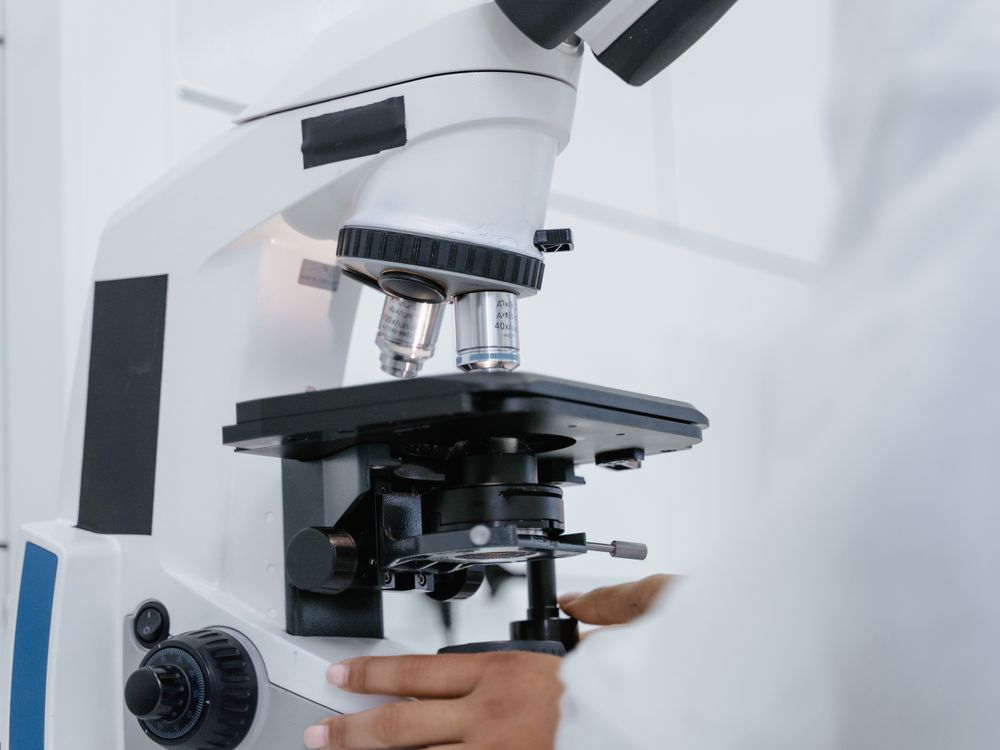
Once your sample reaches the lab, it goes to the microbiology bench, and what happens next is satisfyingly old-fashioned. A technologist takes a calibrated loop, a tiny wire ring that picks up a fixed volume of urine, usually one microlitre, and streaks it across agar plates. Agar is a jelly-like medium loaded with nutrients. The plates go into an incubator held near body temperature, around 36 to 37 degrees, and the clock starts.
Bacteria double roughly every 20 to 30 minutes in those conditions. So a single invisible cell in your sample becomes a visible colony overnight, a dot on the plate big enough to see and count. Because the loop's volume is known, the count converts directly into a number: with a one-microlitre loop, each colony equals 1,000 colony-forming units per millilitre, written CFU/mL. That number estimates how many living bacteria were in each millilitre of your urine.
The technologist then asks: what grew? Colony colour, shape and behaviour on different agars narrow it down, and modern labs confirm with automated systems, sometimes mass spectrometry that reads the organism's protein fingerprint. This is the step where "mixed bacteria" becomes "Escherichia coli" or "Klebsiella pneumoniae".
Some clinics use dipslides, small paddles coated with agar that you dip into the urine yourself, as a halfway option. They're convenient for remote settings, but a lab culture remains the reference method: it uses calibrated volumes, controlled incubation and proper identification, so the colony count actually means something. A dipslide can suggest; a lab culture concludes.
Only then does sensitivity testing begin. The identified bacteria are exposed to a panel of antibiotics, either as small paper discs on a fresh plate or in liquid wells with rising drug concentrations. Where growth stops, the organism is marked susceptible; where it keeps growing regardless, resistant. The full result typically lands on your doctor's desk in two to three days: culture overnight, sensitivity the day after. At our lab in Malad, which runs 24x7, the culture reading is usually ready within about 24 hours of the sample arriving, with the sensitivity pattern following a day later.
Reading your report line by line
A urine culture report looks technical, but it has only a few moving parts. Here's how to read them. One caveat first: reference ranges and cutoffs vary between laboratories, so treat every number below as the general shape of the answer, and your own lab's printed reference interval as the final word.
Organism isolated. This is the name of the bacterium (or yeast) that grew. In a true infection, there's usually one dominant organism. E. coli again leads the pack by a wide margin.
Colony count (CFU/mL). This is where most confusion lives. The classic rule, called the Kass criterion after the researcher who proposed it in the 1950s, says 100,000 CFU/mL or more of a single organism in a properly collected voided sample means significant bacteriuria. Mayo Clinic Laboratories uses a reference range along the lines of "no growth, organism present at less than 10,000 CFU/mL, or urogenital microbiota" as the normal end of the spectrum.
The zone between those numbers is where judgment enters. Lower counts can still mean infection when symptoms are clear, when the sample came from a catheter (where even 1,000 CFU/mL can count), or when the organism is a known troublemaker. Higher counts can mean nothing at all in someone with zero symptoms. The cutoffs also shift between laboratories, because the loop size, the media and the incubation time all vary slightly. If a report quotes a range, trust your lab's own reference interval and your doctor's reading of it over any number you find online.
Growth pattern. "Pure growth" of one organism supports a real infection. Growth of two organisms is a grey area. Growth of three or more different bacteria, with none dominant, is the lab's way of saying the sample was probably contaminated during collection. Good labs don't even run sensitivity on those; they report "mixed microbiota" and ask for a fresh, carefully collected sample.
Pus cells / leukocyte esterase. These may appear alongside the culture result if a routine examination was done on the same sample. They indicate inflammation, not the organism. Pus cells without significant bacterial growth often point to contamination, a partially treated infection, or inflammation from another cause.
The S, I and R columns: the letters that pick your treatment
Below the organism name sits the part your doctor cares about most: a list of drugs, each tagged with a letter. S means susceptible, the drug stops this organism at standard doses. I means intermediate, it might work at higher doses or in the urinary tract, where some drugs concentrate heavily. R means resistant, skip it.
These letters come from comparing the organism's measured response against clinical breakpoints set by standards bodies like CLSI and EUCAST. The lab tests the drugs most relevant to urinary infections first, and many labs practice what's called cascade reporting: they show the preferred, narrow-spectrum options when the organism is susceptible, and hold back broader drugs unless the preferred ones fail. That's deliberate. It nudges prescribing toward the simplest drug that works, which slows resistance.
One practical note: the sensitivity pattern belongs to this infection, at this moment. Bacteria swap resistance genes with cheerful efficiency, which is why a drug that worked for your UTI two years ago isn't guaranteed to work now, and why doctors re-culture recurrent infections instead of reusing old reports.
"No growth", "mixed growth", "contaminated": three outcomes nobody explains
Not every report comes back with a neat organism name and a clean count. The ambiguous outcomes deserve their own tour, because they're the ones that send people back to Google at midnight.
No growth. The plate stayed clean after 24 to 48 hours. Sometimes that's genuinely good news: no bacterial infection. But remember the caveats. Antibiotics taken before the sample can sterilise the plate while the bladder is still infected. Some organisms are slow growers or need special conditions. And symptoms with a negative culture can point elsewhere entirely: irritation, a viral cause, or inflammation without infection.
There's one specific blind spot worth knowing. A routine urine culture grows ordinary bacteria and yeast. It does not grow the organisms behind most sexually transmitted infections. Chlamydia and gonorrhoea need their own dedicated tests, usually PCR on a urine sample or swab, and they won't show up on a standard culture plate no matter how carefully it was done. So burning on urination with a negative urine culture, especially with any sexual risk involved, is a common reason doctors order STI testing next. We covered the gonorrhoea side of that in detail in our gonorrhoea testing guide.
Mixed growth / mixed microbiota. Three or more organisms, none clearly dominant. As the Cleveland Clinic's stewardship guidance puts it, this usually reflects contamination from skin bacteria during collection, not a multi-bug infection. The standard move is to re-educate on the clean-catch technique and repeat the test, not to prescribe three antibiotics. If mixed growth keeps recurring despite careful collection, your doctor may consider whether something anatomical is complicating matters.
Contaminated / unsatisfactory specimen. The lab is telling you the sample itself was the problem: too long at room temperature, visible debris, or a leaking container. This is a collection failure, not a diagnosis. Repeat it properly.
Urogenital microbiota / normal flora. Small numbers of the bacteria that naturally live around the urethra. Not an infection. Not treated.
The questions patients actually ask us at the counter
We hear the same worries at our Malad counter every week. Straight answers:
"My report says one lakh CFU. Is that dangerous?" One lakh is 100,000, the classic cutoff. It means significant bacterial growth, not significant danger. The number describes how many bacteria grew, not how sick you are. Plenty of people with high counts and no symptoms need nothing at all, which brings us to the next question.
"But the routine urine test already showed pus cells. Why did I pay for a culture too?" Because the routine test, the urine routine and microscopy, is a screening step. It spots inflammation in minutes. The urine culture and sensitivity test is the identification step. It names the organism and tests which drugs work against it. Doctors order the quick one first and the precise one when the answer matters: recurrence, treatment failure, pregnancy, or a complicated case.
"Can I just give the sample at home?" Yes. Home collection works fine for urine culture as long as the sample reaches the lab quickly or stays cool. Our team brings the sterile container and wipes to your door, and the sample goes straight into the transport chain.
"Do I need to fast?" No. Eat and drink normally. Being well hydrated actually helps, since you need to produce a sample on demand.
"Why does it take two to three days? The routine test took an hour." Because bacteria need time to grow into countable colonies, and sensitivity testing needs the grown bacteria first. It's a biological process, not a machine reading. No lab can honestly rush it.
"My report names a bacterium I've never heard of. Should I look it up?" You can, but read it with your doctor. Organism names sound alarming out of context, and the internet's first results for any bacterium tend toward worst cases. What matters is the count, whether you have symptoms, and the S/I/R pattern.
"My culture grew E. coli, my friend's grew Klebsiella. Does the name actually change anything?" Sometimes yes, sometimes no. For a simple bladder infection, several common organisms respond to the same first-choice drugs, so the treatment might look identical. The name matters most when the first drug fails, when the organism is an unusual one, or when the sensitivity pattern shows resistance. That's when "which bug" stops being trivia and starts deciding the prescription. It's also why doctors don't reuse a two-year-old culture report for a new infection: the cast of characters changes.
Bacteria in the report, zero symptoms: the case for doing nothing
This is the part that surprises people most. Sometimes a urine culture grows a significant number of bacteria in someone who feels completely fine: no burning, no frequency, no fever. This has a name, asymptomatic bacteriuria, and the guidelines about it are refreshingly clear.
The Infectious Diseases Society of America defines it as 100,000 CFU/mL or more of bacteria in the urine, without any symptoms attributable to a urinary infection. And their recommendation, updated in 2019, is equally plain: don't screen for it and don't treat it, with exactly two exceptions. Pregnant women should be screened and treated, because bacteriuria in pregnancy can ascend to the kidneys. And people about to undergo urologic procedures that cause mucosal bleeding should be screened and treated beforehand.
Everyone else, healthy women, older adults, people with diabetes, catheter users, children, should not be treated for bacteria found by accident. Treating silent bacteriuria doesn't prevent future UTIs. It does breed resistance, trigger side effects, and waste money. Cleveland Clinic's stewardship program makes the same point from the lab side: reports should remind clinicians that high counts without symptoms may not represent true infection, and mixed flora should not be treated.
If you're pregnant, the screening usually happens once in early pregnancy: a routine urine culture alongside your first antenatal blood work. If it grows significant bacteria, you get treated even though you feel fine, and your doctor will usually recheck with another culture after treatment to make sure it cleared. This is one of the few places in medicine where treating a lab number without symptoms is the evidence-based move, because an untreated bladder infection in pregnancy can ascend to the kidneys, and kidney infection in pregnancy is genuinely dangerous for both mother and baby. So the same report that means "do nothing" in a non-pregnant adult means "treat and recheck" in pregnancy. Context is everything.
So if your report shows bacteria and you feel fine, the right response is usually a conversation with your doctor, not a prescription. The exception, as always, is pregnancy: if you're pregnant, that screening culture matters, and a positive one gets treated.
Three ways a good sample gets ruined
Most repeat cultures happen because of something that went wrong before the sample ever reached the lab. Here's the short version, in pairs.
The timing
Do: give the sample before your first antibiotic dose, and hand it to the lab the same day. If home collection, keep the sealed container cool and let the team collect it promptly.
Don't: take the tablet first and "give the sample tomorrow". Antibiotics sterilise the plate, and a falsely negative report can delay the right treatment.
The collection
Do: wash your hands, use the wipes front to back, and catch the midstream portion in the sterile cup without letting it touch your skin. An ounce or two is plenty.
Don't: scoop the first splash into the cup, touch the inside of the lid, or collect into a washed-out jam jar from home. Household containers carry their own bacteria and detergents, and both wreck the result.
The wait
Do: refrigerate the sample if it can't reach the lab within about an hour. Tell the lab if you're menstruating, if you've started antibiotics, or if the sample sat around.
Don't: leave the cup on a warm bathroom shelf for the afternoon and drop it off in the evening. Room-temperature urine is an incubator, and the count it produces belongs to the cup, not to you.
Getting it done in Mumbai: booking, home collection, and the report timeline
If your doctor has ordered a urine culture, the practical side is straightforward. The test needs no fasting and no appointment at most labs. You can walk into our Malad centre any time, day or night, since it runs 24x7, or book a free home collection and have the sterile kit brought to your doorstep anywhere across Malad, Kandivali, Borivali and Goregaon. The phlebotomist waits while you collect the sample, seals it, and gets it into the cold chain immediately, which is exactly what a culture sample needs.
Expect the culture reading in about 24 hours and the full sensitivity pattern a day or two after that. Your doctor gets both and decides from there.
Carry two things when you go: your doctor's prescription or test order, and any previous urine reports you have. Old reports help more than people realise. If last year's culture grew the same organism with the same sensitivity pattern, your doctor learns something. If this year's pattern looks different, they learn something else. A folder of old reports is the cheapest diagnostic tool you own. The urine culture and sensitivity test page carries the current price and booking slots; the urine routine test is the quicker screening companion doctors often order alongside it, and the urine complete panel bundles the routine examination with related parameters. If your doctor is working up a broader problem, recurring fevers, suspected kidney involvement, or a full health review, it's worth glancing at the health packages too, since a culture ordered in isolation sometimes turns into a wider workup. You can also browse the full tests page if you're comparing options, or start from the home page if you're new to the lab.
One last thing worth saying plainly. A urine culture is a humble test, a cup, a plate, two days of waiting. But it's also the test that stops the guessing. Every year, millions of antibiotic courses get prescribed for urinary symptoms, and a meaningful share of them miss: wrong drug, resistant organism, or no bacterial infection at all. The culture is how your doctor finds out which of those stories is yours. Give the sample carefully, give it before the first dose, and read the report with your doctor, not alone at midnight.
When the report is ready, you'll get it the way most of our patients prefer: a PDF on WhatsApp and email, usually the same evening the culture reads out, with the sensitivity table attached a day later as a second page. The PDF lists the organism, the count, and the S/I/R table in that order, which is the same order we walked through above. If anything on it puzzles you, call the lab on 84250 40353 before you call Google. We'd rather explain a report twice than have you worry about it once.
References
- Infectious Diseases Society of America: Clinical Practice Guideline for the Management of Asymptomatic Bacteriuria (2019 update)
- Cleveland Clinic: Diagnostic Stewardship for Urinary Tract Infection: expert guidance snapshot
- Mayo Clinic Laboratories: Test Catalog: Bacterial Culture, Aerobic, with Antimicrobial Susceptibilities, Urine
- MedlinePlus (NIH): Clean catch urine sample, Medical Encyclopedia
Book these tests at home
Live prices · free home sample collection in Malad, Kandivali, Borivali & Goregaon
Urine C/S
- Report in 120 hrs
- At our Malad West lab
Urine Routine & Microscopic Examination
- Report in 12 hrs
- Free home collection
Urine Complete
- Report in 12 hrs
- Free home collection
More tests related to this topic
Other Culture & Sensitivity tests you can book with free home sample collection.
AFB - Xpert panel by Combo(MTB /RIF Detection & AFB Culture) - Extrapulmonary Samples
- Report in 120 hrs
- At our Malad West lab
AFB DRUG SUSCEPTIBILITY PANEL 1ST AND 2ND LINE PANEL 10 DRUGS
- Report in 48 hrs
- Free home collection
AFB Rapid culture by MGIT - BAL / Other Respiratory samples
- Report in 120 hrs
- At our Malad West lab
AFB Rapid culture by MGIT - Body Fluid
- Report in 120 hrs
- At our Malad West lab
AFB Rapid culture by MGIT - Pus, abscess and aspirates
- Report in 120 hrs
- At our Malad West lab
AFB Rapid Culture by MGIT - Sputum
- Report in 120 hrs
- At our Malad West lab
AFB Rapid culture by MGIT - Tissue/Biopsy
- Report in 120 hrs
- At our Malad West lab
AFB Rapid Culture by MGIT - Urine
- Report in 120 hrs
- At our Malad West lab
Anaerobic Culture and Susceptibility (Manual method)
- Report in 120 hrs
- At our Malad West lab
Anaerobic Culture and Susceptibility(Vitek 2 Compact)
- Report in 120 hrs
- At our Malad West lab
Anaerobic Culture and Susceptibility(Vitek 2 Compact)
- Report in 120 hrs
- At our Malad West lab
Blood C/S - BacT/Alert (with bottle)
- Report in 120 hrs
- At our Malad West lab
Get more from the same visit
Health packages that already include these tests, and tests people usually add.
Frequently asked questions
Do I need to fast before a urine culture?
No. Eat and drink normally. Being well hydrated actually helps, since you need to produce a sample on demand.
Can I give the sample during my period?
You can, but tell the lab first. Menstrual blood can complicate the reading, and the lab needs to note it on the report.
Is a first-morning sample required?
Preferred, not mandatory. Urine held in the bladder for a few hours is more concentrated, but a fresh sample now beats a perfect one delayed past your first antibiotic dose.
I already started antibiotics. Should I still give the sample?
Yes, but tell your doctor and the lab exactly when you took the first dose. The result is read with that timing in mind.
Why does the report take two to three days?
Bacteria need 24 to 48 hours to grow into countable colonies, and sensitivity testing needs those colonies first. It is a biological process that no lab can honestly rush.
What does 100,000 CFU/mL mean?
It is the classic cutoff for significant bacterial growth in a properly collected sample. It describes how much grew, not how sick you are; symptoms and context decide what it means.
My report says mixed growth. What now?
It usually means skin bacteria contaminated the sample during collection. The standard next step is a repeat test with careful clean-catch technique, not antibiotics.
Bacteria were found but I feel fine. Do I need treatment?
Usually not. Guidelines recommend treating silent bacteriuria only in pregnancy and before certain urologic procedures. Discuss it with your doctor.
Why order a culture when the routine urine test already showed infection?
The routine test spots inflammation in minutes; the culture names the exact organism and tests which drugs work against it.
How often can a urine culture be repeated?
As often as your doctor needs. It is non-invasive with no cumulative risk, and repeat cultures are routine in recurrent infections and after treatment.
HWP Diagnostic Editorial Team
Health guides written by the team at HWP Diagnostic, Mumbai, to help you understand your tests before you book. This article is for general education and is not a substitute for medical advice - reference ranges vary between labs, so always discuss your results with your doctor. Read our editorial policy. Photos: Pexels.