Key takeaways
- Gonorrhea is often silent; feeling fine is not a test result.
- Test with PCR (NAAT), 1 to 2 weeks after exposure, not the next morning.
- Match the specimen to the exposure site: urine for genital, swabs for throat and rectal exposure.
- For urine PCR, hold urine at least one hour and give only the first 10 to 30 ml.
- A positive report means treating promptly plus testing partners from the last 60 days.
- No sex for 7 days after treatment, and everyone treated should retest at 3 months.
- Finish the full antibiotic course; resistance is the real threat with gonorrhea.
Book tests from this article
Sample collected at home - free
- Chlamydia Trachomatis DNA Detection by RT - PCR, Urine
₹4,699₹6,24925% off
- VDRL Test
₹249₹2,09988% off
Free collection 24 hr reports
The answer in thirty seconds
If you had unprotected sex recently and you are wondering whether you should get tested for gonorrhea, here is the short version: yes, test. Gonorrhea is one of the most common sexually transmitted infections in the world, and a large share of people who carry it feel absolutely nothing. The test you want is the PCR test (doctors call it NAAT, short for nucleic acid amplification test). It looks for the bacterium's DNA in a urine sample or a swab, it is painless, it needs no needle and no fasting, and the report usually lands within about a day. The one timing rule that matters: wait at least 1 to 2 weeks after the exposure before you test, because testing on day one can miss the infection. Read on if you want the full picture, how the sample is collected, what the report means, and how to do all of this in Mumbai without awkwardness.
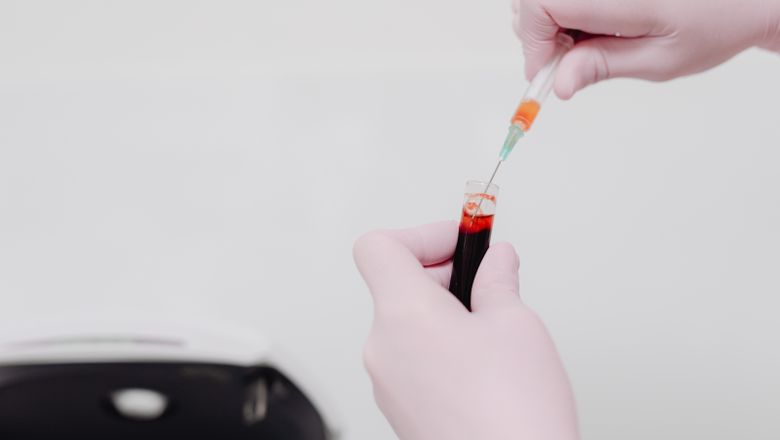
What the PCR actually hunts for
Gonorrhea is caused by a bacterium called Neisseria gonorrhoeae. It is a gram-negative bacterium that thrives in the warm, moist linings of the body: the urethra, the cervix, the rectum, the throat, and occasionally the eyes. It passes through vaginal, anal, or oral sex. One detail people get wrong: transmission does not require ejaculation. The bacteria live in semen, pre-ejaculate, and vaginal fluids, so contact is enough.
The PCR test, which our catalog lists as the gonorrhoea PCR test, does not wait around for the bacteria to grow in a dish. It searches the sample for the bacterium's genetic material and then amplifies it, copying it over and over until even a tiny trace becomes detectable. That amplification step is the whole trick. It means the test can pick up an infection earlier and more reliably than the older culture method, and it works on far more specimen types. CDC describes NAATs as having sensitivity superior to culture for N. gonorrhoeae from both genital and non-genital sites.
That does not make culture useless. Culture is still the method that tells doctors which antibiotics the bacteria respond to, because you can only test drug susceptibility on living bacteria. If a treatment ever fails, the doctor reaches for culture. For routine testing, though, PCR is the standard: more sensitive, faster, and it accepts urine and swabs instead of demanding the fussy handling that gonococcus cultures need.
The accuracy picture has one honest caveat, and it belongs in this article because hardly anyone mentions it. Some PCR tests can cross-react with harmless Neisseria species that naturally live in the throat, which makes throat-swab results a little less specific than genital results. CDC flags exactly this: certain NAATs have comparably low specificity when testing oropharyngeal specimens. In plain terms, a positive from a throat swab in someone with no symptoms and no real exposure deserves a careful second look, sometimes a confirmatory test with a different DNA target. This is not a reason to avoid throat testing. It is a reason to tell your doctor where you may have been exposed, so they pick the right specimens in the first place.
When the clock starts: the 1–2 week window
Here is the question we hear at the counter more than any other: "I had unprotected sex last night. Can I test tomorrow?" The honest answer is no, not usefully. The bacteria need time to multiply to levels the test can detect. Testing on day one or two after exposure can give you a negative report that means nothing, which is worse than no report at all because it feels like reassurance.
So what is the actual window period? Here is where candor matters more than a neat number: there is no single official figure. CDC's gonorrhea guidelines do not state a precise NAAT window period. The clinical convention most doctors follow is about 1 to 2 weeks after the exposure for asymptomatic testing, with retesting if an early negative was taken. Some clinical sources quote around 14 days as optimal. A few note that modern NAATs can sometimes detect infection earlier, in which case an early negative should simply be repeated. Practices vary, so if your test was taken very soon after exposure, assume the clock has not finished and retest at the 2-week mark.
Symptoms follow their own loose timetable, and the sources disagree with each other enough that a single number would be dishonest. NHS says symptoms usually start around 2 weeks after infection, sometimes only after many months. Canadian public-health guidance says 2 to 7 days is typical. Lab leaflets quote 3 to 5 days. The truthful summary: symptoms often appear between 2 days and 2 weeks after exposure, and sometimes much later. In men, urethritis announces itself with burning while urinating and a pus-like discharge from the penis, sometimes with sore, swollen testicles. In women, when symptoms appear at all, they look like yellow or greenish vaginal discharge, burning while peeing, lower abdominal pain, or bleeding between periods. Rectal infection can cause anal itching or a pus-like rectal discharge, and it can also cause nothing. Throat infection is usually silent; occasionally it is just a mild sore throat.
That disagreement in the sources is not a problem for you. It is a reminder that your own body is not a clock you can set. If symptoms show up, get tested immediately and do not wait out the window. If nothing shows up but you had a risky exposure, test at the 1–2 week mark and retest if you jumped the gun.
The part nobody warns you about: silent infections
So how do you catch an infection that refuses to show itself? This is the central problem of gonorrhea, and it is why "wait and see" is the worst possible strategy. A large proportion of infections never produce a single symptom. NHS patient leaflets cite roughly half of women and about a tenth of men with no symptoms at all, and CDC stresses that infections in women are commonly asymptomatic or go unrecognized until complications appear. Rectal and throat infections are usually silent in everyone.
Silent does not mean harmless. In women, untreated gonorrhea can climb into the upper reproductive tract and cause pelvic inflammatory disease, which scars the fallopian tubes. That scarring is what leads to infertility and raises the risk of ectopic pregnancy, and PID can develop without any dramatic symptoms along the way. In men, untreated infection can inflame the epididymis, the coiled tube behind the testicle that stores and carries sperm, and in rare, neglected cases it can affect fertility. Both sexes face the rare but serious disseminated gonococcal infection, where the bacteria enter the bloodstream and produce fever, a painful rash with small spots on the arms and legs, and septic arthritis, usually in one or two large joints like a knee or ankle. It can be life-threatening. Babies born to infected mothers can contract an eye infection during delivery that causes blindness if untreated.
There is one more connection worth stating plainly. Gonorrhea causes inflammation, and inflammation recruits exactly the immune cells that HIV infects, so having gonorrhea raises the chance of acquiring and transmitting HIV. That is one reason doctors do not test for gonorrhea alone: the standard workup also checks for chlamydia, syphilis, and HIV. Chlamydia is the most common co-traveler, and our catalog has a matching chlamydia PCR test that uses the same NAAT method, plus a VDRL test for syphilis and an HIV antibody test when a full screening makes sense.
Urine, swab, or both: match the test to the exposure site
A genital urine test cannot detect a throat infection. This sounds obvious once stated, and it is the single most common reason testing misses gonorrhea. The test has to match the site of exposure. CDC's screening guidance says it plainly: screen at all anatomic sites of sexual exposure.
What does that mean in practice? For men, the optimal specimen is first-void (first-catch) urine. For women, a vaginal swab is the most sensitive option, with endocervical swabs and urine also accepted. Urethral swabs work for men. And for anyone who had oral or anal exposure, rectal and pharyngeal swabs enter the picture, for men and women both. If you had vaginal sex only, a urine or vaginal sample covers it. If you also had oral sex, you need the throat swab too. If you had anal sex, add the rectal swab. A doctor who knows the full exposure history orders the right combination; a doctor who only hears half the story may order half the tests. Be complete about it. Doctors have heard everything, and the clinical history form is not the place for editing.
One more practical note. Gram stain, the old microscope method where a technician looks for intracellular gram-negative diplococci, still has a niche: a urethral Gram stain showing the classic diplococci is diagnostic in a symptomatic man. But a negative Gram stain does not rule out infection in an asymptomatic man, and Gram stain is not recommended at all for endocervical, pharyngeal, or rectal specimens. PCR has replaced it for routine work, and that is what your report will say.
Getting the sample right
The test is only as good as the sample, and with gonorrhea the collection instructions are oddly specific. The good news: there is no needle, no fasting, and you can do it any time of day. The bad news: you have to pee on a schedule, and that part trips people up. At our lab in Malad, the single most common pre-test phone call about this test is a sheepish "how long am I supposed to hold it?" Here is the answer, in the paired format you should read carefully before the collection.
The urine sample
Do: hold your urine for at least one hour before collecting. This is the lab-kit standard; some clinics advise up to two hours, so if you can comfortably hold two, fine, but one hour is the line. When you go, collect only the first 10 to 30 ml of the stream, roughly the first few seconds, into the sterile cup. The rest goes into the toilet. That first portion carries the most organisms washed out of the urethra, and it is the part the test needs.
Don't: empty your bladder right before the appointment and then try to produce a sample, do not wash or cleanse the genital area immediately before collecting, and do not fill the cup with mid-stream urine as if this were a routine urine test. Mid-stream collection, the standard instruction for other urine tests, is wrong for gonorrhea PCR. First-catch is the instruction, and it is the opposite of what most people expect.
The swab sample
Do: let the phlebotomist or clinic staff collect genital, rectal, or throat swabs, or follow the self-collection instructions exactly if you are given a self-swab kit. CDC accepts patient-collected swabs for NAAT as an alternative to provider-collected ones, provided you get proper instructions. A throat swab takes seconds and feels like a brief tickle at the back of the throat. A rectal swab is over before you have time to be embarrassed about it.
Don't: douche or use vaginal washes before a swab collection, and do not assume a throat swab is unnecessary because "it was just oral." If there was oral exposure, the throat swab is the test. Also, do not collect a swab while you are on your period and assume it ruins everything: mention it to the staff, and they will advise whether to proceed or reschedule the vaginal swab.
Talking to the phlebotomist
Do: tell the collection staff plainly which exposures you had, so the right specimens get collected. If you booked home collection and the phlebotomist arrives at your door, it is completely normal to step into the bathroom for the urine sample and hand over the sealed cup. Nobody at the lab treats this as unusual. We collect these samples every day.
Don't: skip mentioning a site of exposure out of shyness and then wonder why a report came back negative while symptoms persist. A negative from the wrong site is not a clean chit. If you realize afterward that you left something out, call the lab the same day; a repeat collection is a small errand compared to a missed infection.
What happens at the lab: from sample to PCR result
Once your sample reaches the lab, the technicians extract the genetic material from it and run it through real-time PCR. The machine cycles the sample through heating and cooling phases, and each cycle doubles the target DNA. After a few dozen cycles, even a handful of bacterial genomes becomes a signal loud enough to read. "Real-time" means the instrument watches that signal grow as it happens, which also gives a sense of how much target was present. Quality controls run alongside: a positive control to prove the reaction worked, a negative control to prove nothing contaminated it, and often an internal control from your own sample to prove the extraction succeeded.
This matters for one practical reason: contamination control is the lab's obsession with PCR, not yours. A positive result means N. gonorrhoeae DNA was detected in your sample. A negative means none was detected. An indeterminate or invalid result means the controls failed or the sample was inadequate, which is a collection or processing problem, not a medical verdict. In that case the lab asks for a fresh sample, and you recollect. Do not read an indeterminate as a maybe-positive and do not read it as a maybe-negative. It is a do-over.
Turnaround is quick by the standards of infectious-disease testing. PCR runs are batched, and most labs report within about 24 hours of receiving the sample. Our lab runs 24x7, so a sample collected in the evening is typically processed in the next run cycle rather than sitting over a weekend. Your report lands as a PDF with the method stated (real-time PCR / NAAT), the specimen type, and a detected/not-detected result, sometimes with a cycle-threshold value that your doctor interprets in context.
Reading your report: positive, negative, indeterminate
Reports look intimidating until you know the three words that matter. Here is what each one actually means for you.
A positive (detected) report means the lab found N. gonorrhoeae DNA in your sample. Take it to a doctor promptly and get treated. Also get tested for chlamydia, syphilis, and HIV if you have not already, because co-infections are common and doctors check for all of them together. One caveat from the research: in a person with very low risk and no symptoms, especially with a throat-swab positive, false positives are more likely, so the doctor may confirm with a second test using different DNA targets before treating. Do not ignore a positive on this basis, and do not panic on it either. Show it to the doctor and let them decide.
A negative (not detected) report means no bacterial DNA was found in that sample. It is reliable when the timing was right (1 to 2 weeks after exposure) and the specimen matched the exposure site. It is not reliable if you tested two days after exposure, or if you had oral exposure and only gave urine. A negative is a statement about that sample at that time, not a lifetime certificate. Past infection gives no immunity, and reinfection is common.
An indeterminate or invalid report means the sample could not be processed properly. Recollect and rerun. It happens, it is nobody's fault, and it says nothing about whether you are infected.
The questions everyone asks but few say aloud
I had unprotected sex last night. Can I test tomorrow? You can, but the result will not mean much. Wait 1 to 2 weeks after the exposure for the NAAT to be reliable. If you already tested too early and it came back negative, retest at the 2-week mark.
There is no needle? Then how is this a test? Gonorrhea PCR is not a blood test. The bacteria live in the linings of the urethra, cervix, throat, and rectum, so the test takes its sample from there: first-catch urine or a swab. No needle, no blood draw, no fasting.
I have zero symptoms. Can I still be infected? Yes, and this is the norm rather than the exception. Roughly half of infected women and about a tenth of infected men have no symptoms by some estimates, and throat and rectal infections are usually silent. "I feel fine" is not a test result.
I only had oral sex. Do I still need the urine test? You need the throat swab. The urine test covers the genital site, not the throat. Tell the doctor about the oral exposure so the right specimen is ordered.
How long do I hold my urine before the sample? At least one hour. Some clinics say up to two. Then collect only the first 10 to 30 ml of the stream. Do not wash the area right before collecting.
My report says indeterminate. Am I infected? Nobody can say from that report. It means the sample failed processing. Recollect and rerun; the second sample usually reads cleanly.
Will my family or partner find out I got tested? Your report goes to you. India's national STI guidelines (NACO) require designated STI clinics to display an oath of confidentiality, and the program stresses that privacy and a non-judgmental attitude are what make people actually use these services. At a private lab, your report is yours alone. If you book home collection, the visit looks like any other lab visit.
My partner has no symptoms. Do they still need treatment? Yes. Sex partners from the 60 days before your symptoms started or your diagnosis should be evaluated, tested, and treated even if they feel perfectly fine, because they may be silently infected and reinfect you. If your last sexual contact was more than 60 days ago, the most recent partner should be treated. Clinics can also contact partners anonymously on your behalf.
Do I need to retest after treatment? For uncomplicated genital or rectal infection, CDC says a test of cure is not needed, but everyone treated should be retested at 3 months because reinfection is common, mostly from untreated or new partners. Throat infections are the exception: they are harder to clear, so a test of cure 7 to 14 days after treatment is recommended. If symptoms persist 3 to 5 days after treatment with no new sexual contact, go back to the doctor; that is evaluated with culture and drug-susceptibility testing.
Is one negative enough if I was exposed at multiple sites? No. Each exposed site needs its own test. A negative urine result says nothing about the throat.
After a positive result: the 60-day rule, the 7-day rule, the 3-month retest
Three numbers organize everything that happens after a positive report. The 60-day rule: partners you had sexual contact with in the 60 days before your symptoms began or before your diagnosis need to be evaluated and treated, even with no symptoms of their own. If the last exposure was longer ago than that, your most recent partner still gets treated. This is not about blame. It is about breaking a chain, because an untreated partner reinfects you and the whole cycle restarts.
The 7-day rule: no sex until 7 days after you have completed treatment, all partners have been treated, and symptoms are fully resolved. Starting antibiotics and resuming sex on day three is how reinfection happens.
The 3-month retest: everyone treated for gonorrhea should be retested at 3 months, regardless of whether they think their partners were treated. Reinfection is genuinely common. If the 3-month visit is not possible, retest at the next medical visit within 12 months. For throat infections specifically, remember the earlier test of cure at 7 to 14 days, since pharyngeal gonorrhea clears less reliably than genital infection.
Treatment, resistance, and why finishing the course matters
Gonorrhea is curable. That sentence needs its footnote immediately: the bacterium has developed resistance to nearly every antibiotic class ever used against it, and both WHO and CDC track this as a serious global problem. WHO lists gonorrhea as a high-priority antimicrobial-resistant pathogen and runs global surveillance for resistant strains. This is why your doctor chooses the regimen rather than you choosing it, and why the regimen your doctor picks is shaped by current resistance patterns, not by what worked for a friend five years ago.
What you control is adherence. Finish the full course exactly as prescribed, even if symptoms vanish on day two. Do not self-treat with leftover antibiotics or tablets bought over the counter; incomplete and wrong treatment is exactly what drives resistance. If symptoms do not resolve within 3 to 5 days of starting treatment, and you have had no new sexual contact in that time, go back. That situation gets evaluated with culture plus susceptibility testing so the doctor can see what the bacteria actually respond to. No medicine names or doses belong in this article, and none are here: the prescription is the doctor's job. Yours is to take it completely and on schedule.
Who should get screened with zero symptoms
If testing only happened when symptoms appeared, gonorrhea would never be controlled, because most of it never announces itself. Guidelines therefore recommend screening people without any symptoms at all. CDC advises annual screening for all sexually active women under 25, and for women 25 and older who are at increased risk: new or multiple partners, a partner with other partners, a partner with an STI, or any STI during pregnancy. Sexually active men who have sex with men should be screened at least annually at all sites of exposure, every 3 to 6 months if at higher risk. People living with HIV get screened at the first HIV-care visit and at least annually. Pregnant women under 25, and older pregnant women at increased risk, should be screened, treated immediately if infected, and retested within 3 months. Screening is not recommended for low-risk heterosexual adults over 25, which is a way of saying the test is targeted, not a ritual for everyone.
India has its own official framework worth knowing about. NACO, under the Ministry of Health and Family Welfare, runs designated STI/RTI clinics (Suraksha clinics) where the national program uses a syndromic approach with laboratory tests where available. The guidelines put confidentiality at the center: clinics display an oath of confidentiality, partner notification is voluntary and non-coercive, and staff are required to be sensitive and non-judgmental. India's program even provides presumptive treatment for asymptomatic gonococcal infection in men who have sex with men at the first visit, which is a quiet official admission of exactly what this article argues: silent infection is the real public-health problem. Between these government clinics and private labs offering NAAT, a Mumbai resident has genuine options, and none of them require announcing anything to anyone.
Getting tested in Mumbai without the awkwardness
Here is how it works in practice at our end. You book on 84250 40353 or through the gonorrhoea PCR test page, where the current price is listed. Choose home collection or walk into the lab in Malad; the lab runs 24x7, so a sample collected at 9 pm is not sitting around until morning. For home collection across Malad, Kandivali, Borivali, and Goregaon, the practical tip is to time your urine hold around the phlebotomist's arrival: hold for at least that one hour, step into your own bathroom when they arrive, hand over the sealed cup, and you are done. No fasting, no special preparation, no needles. Reports typically reach you within about 24 hours as a PDF, addressed to you alone.
If you had multiple exposures or just want the full workup in one go, the test sits inside broader panels. The Sexual Health Screening - Advanced bundles the gonorrhea PCR with the other core STI tests, and the Sexual Health Screening - Complete widens that further. Both are on our packages page. And if you are reading this because of a related concern, our earlier post on the chlamydia IgG test explains the other half of the most common co-infection pair.
Pulling it together: gonorrhea is common, frequently silent, and completely detectable with a painless PCR test, as long as you test at the right time and from the right site. Wait 1 to 2 weeks after exposure before testing, give first-catch urine or the right swabs, and remember that a urine test never covers the throat. If the report is positive, treat it promptly, bring your partners from the last 60 days into care, hold off sex for 7 days after treatment, and come back for the 3-month retest. Finish every antibiotic course exactly as prescribed, because resistance is the one thing that can turn a curable infection into a stubborn one. And if you have new or multiple partners, build testing into your routine the way you would any other health check. The test takes minutes. The peace of mind lasts considerably longer.
References
- CDC: STI Treatment Guidelines: Gonococcal Infections Among Adolescents and Adults
- NHS: Gonorrhoea (Health A-Z)
- WHO: Multi-drug Resistant Gonorrhoea fact sheet
- NACO (Ministry of Health & Family Welfare, India): Operational Guidelines for STI/RTI
Book these tests at home
Live prices · free home sample collection in Malad, Kandivali, Borivali & Goregaon
Neisseria Gonorrhoea DNA Detection by Real Time PCR
- Report in 48 hrs
- Free home collection
Chlamydia Trachomatis DNA Detection by RT - PCR, Urine
- Report in 48 hrs
- Free home collection
VDRL Test
- Report in 11 hrs
- Free home collection
HIV Antibody Test
- Report in 24 hrs
- Free home collection
More tests related to this topic
Other STD tests you can book with free home sample collection.
Anti Chlamydia trachomatis Antibody Igg
- Report in 24 hrs
- Free home collection
Anti Chlamydia trachomatis Antibody Igm
- Report in 24 hrs
- Free home collection
Anti HCV (Hepatitis C Antibody)
- Report in 24 hrs
- Free home collection
Anti HCV IgM
- Report in 24 hrs
- Free home collection
Chlamydia Trachomatis IgA Antibody by ELISA
- Report in 24 hrs
- Free home collection
FLUORESCENT TREPONEMAL ANTIBODY (FTA - ABS)
- Report in 24 hrs
- Free home collection
HBsAg (Hepatitis B Surface Antigen)
- Report in 24 hrs
- Free home collection
HbsAg (Rapid Card test)
- Report in 24 hrs
- Free home collection
Hepatitis B Surface Antigen (HBsAg) (Quantitative)
- Report in 24 hrs
- Free home collection
Herpes Simplex Virus (HSV I & II) - IgG
- Report in 24 hrs
- Free home collection
Herpes Simplex Virus (HSV I & II) - IgM
- Report in 24 hrs
- Free home collection
Herpes Simplex Virus I (HSV) - IgG
- Report in 24 hrs
- Free home collection
Get more from the same visit
Health packages that already include these tests, and tests people usually add.
Frequently asked questions
How soon after unprotected sex can I take the gonorrhea test?
Wait 1 to 2 weeks after the exposure. Testing the next day can miss the infection, since the bacteria need time to multiply to detectable levels. If you tested too early and it was negative, retest at the 2-week mark.
Is the gonorrhea test a blood test?
No. The PCR test uses a first-catch urine sample or a swab from the exposed site. There is no needle, no blood draw, and no fasting needed.
Can I have gonorrhea with no symptoms at all?
Yes. Roughly half of infected women and about a tenth of infected men have no symptoms, and throat and rectal infections are usually silent. Symptoms are not a reliable guide.
I only had oral sex. Is a urine test enough?
No. A urine test only covers the genital site. Oral exposure needs a throat swab. Tell the doctor about every type of exposure so the right specimens are ordered.
How should I prepare for the urine sample?
Hold your urine for at least one hour (some clinics say up to two), then collect only the first 10 to 30 ml of the stream in the sterile cup. Do not wash the area right before collecting, and do not give a mid-stream sample.
My report says indeterminate. What does that mean?
It means the sample could not be processed properly, a collection or lab-processing issue, not a medical verdict. You will be asked to give a fresh sample and the retest usually reads cleanly.
Will anyone else find out that I got tested?
No. Your report goes to you alone. India's national STI guidelines require designated clinics to uphold confidentiality, and private labs report only to the patient. Home collection looks like any other lab visit.
My partner has no symptoms. Do they need treatment too?
Yes. Partners from the 60 days before your symptoms started or your diagnosis should be evaluated and treated even without symptoms, since silent infection can reinfect you. Avoid sex until 7 days after treatment is complete and all partners are treated.
Do I need to retest after treatment?
For genital or rectal infection, a test of cure is not needed, but CDC advises a retest at 3 months because reinfection is common. Throat infections need a test of cure 7 to 14 days after treatment since they clear less reliably.
What if the first test was negative but symptoms continue?
Go back to the doctor. The test may have been taken too early, or the wrong site may have been sampled. The doctor may repeat the PCR from the right specimen or use culture if treatment failure is suspected.
HWP Diagnostic Editorial Team
Health guides written by the team at HWP Diagnostic, Mumbai, to help you understand your tests before you book. This article is for general education and is not a substitute for medical advice - reference ranges vary between labs, so always discuss your results with your doctor. Read our editorial policy. Photos: Pexels.