
Key takeaways
- Dengue test prices follow the method: rapid cards are cheapest, ELISA sits in the middle, and bundled panels cost more while covering more markers.
- NS1 is the test for the first week of fever; IgM takes over after day 7. The day of fever should choose the test.
- Platelet counts typically slide on days 3 to 7 and recover after; the trend across reports matters more than any single number.
- Daily CBC monitoring from day 3 is the WHO-backed rhythm; rapidly falling counts mean checks every 6 to 8 hours.
- Platelet transfusion is decided by active bleeding, not by the count alone (WHO 2025 guidance).
- Use paracetamol for dengue fever; aspirin and ibuprofen raise bleeding risk.
Book tests from this article
Sample collected at home - free
- Dengue NS1 Antigen
₹949₹1,44935% off
- Platelet Count
₹199₹29933% off
- Complete Blood Count (CBC)
₹199₹59967% off
Free collection 24 hr reports
The short answer on dengue test prices
If you or someone at home has a fever and dengue is on the table, here is what testing actually costs at our lab right now, no hedging. A dengue NS1 antigen test is listed at ₹949. The ELISA version of NS1 is listed at ₹849. The rapid card versions of NS1, IgM and IgG sit at ₹349 each. The ELISA versions of the IgM and IgG antibody tests are listed at ₹799 each. A platelet count is listed at ₹199, and a full CBC at ₹199. The bundled dengue panels run from ₹2,049 (Basic, 29 parameters) up to ₹4,149 (Complete, 78 parameters). Home sample collection is free across our service areas, so the number on the test page is the number you pay.
Two honest caveats before anything else. Prices move, so the figure on the live test page is the one that counts, not the figure in this article. And the cheapest test is not automatically the right test. Dengue diagnosis is a calendar problem as much as a money problem: the test that works on day 2 of fever is a different test from the one that works on day 9. Pick the wrong day and even a good test tells you nothing.
Why the same diagnosis costs ₹349 at one counter and ₹949 at another
So why does the price list look like a menu with no explanations? Because three different chemistries are hiding under the single word "dengue test," and they cost different amounts to run.
The ₹349 rapid card is a lateral-flow strip, the same family of technology as a home pregnancy test. A drop of blood, a line appears or it doesn't, and the answer is in your hand in about 15 to 20 minutes. It is fast and cheap because the chemistry is simple and it needs no big analyzer.
The ₹849 to ₹949 ELISA versions run your sample on a plate reader with antibodies, washing steps and calibrated controls. It takes longer and needs a proper lab setup, but it gives a more sensitive read with less room for a tired eye misreading a faint line.
The most expensive route, RT-PCR, hunts for the virus's genetic material itself. It needs a molecular lab, trained staff and expensive reagents, which is why it sits at the top of the price ladder wherever it is offered.
Then there is the question of how many markers you buy in one go. A single NS1 test checks one thing. A panel checks NS1 plus the antibodies plus the blood counts that tell the doctor how the illness is behaving. Buying the bundle costs more on the receipt and often less per marker, the same arithmetic as buying the family pack of anything else.
None of this is a comment on any other lab's pricing, and we are not going to quote competitors' numbers here. The honest general rule: when two prices for a "dengue test" look wildly different, they are usually different tests wearing the same name. Ask which method is on the report (rapid card, ELISA or PCR) and which markers are included, and the price gap usually explains itself.
The right test on the right day beats the cheapest test
Here is the part that saves people the most money and the most confusion. Dengue markers appear and fade on a schedule, and the schedule is set by your immune system, not by the lab.
NS1 is a protein the virus sheds into your blood while it is actively replicating. The CDC frames the acute testing window as the first 0 to 7 days from symptom onset, using NAAT (PCR) plus IgM, or NS1 plus IgM. Mayo Clinic Laboratories notes NS1 can stay detectable up to about 10 days after symptoms start. Either way, the first week is NS1's territory. A negative NS1 or PCR in that window still does not fully rule out dengue, which is why doctors pair it with the antibody test.
IgM, the antibody your body makes against the virus, shows up around day 4 or 5 and becomes the reliable marker after day 7. IgG arrives a little later and then lingers for years, which makes a single IgG result useless for diagnosing a current infection. That is straight from the CDC's clinical testing guidance.
The practical upshot for your wallet: on day 2 of fever, an NS1 test is the sensible first spend. On day 9, NS1 has mostly left the building and an IgM test is the one that can still answer the question. We have a full day-by-day walkthrough of which dengue test to take on which day of fever if you want the complete timeline. Getting this right matters more than saving ₹200 on the method, because a mistimed test is money spent on no information at all.
Platelets: the number that will run your next 48 hours
Once dengue is confirmed or strongly suspected, the conversation shifts. The virus test has done its job, and a much humbler number takes over: your platelet count.
Platelets are the tiny cell fragments in your blood that plug leaks in blood vessels. When they fall too low, the body struggles to stop small bleeds, which is why doctors watch them so closely in dengue. A normal platelet count is 150,000 to 400,000 per microlitre according to MedlinePlus, while many laboratories use 450,000 as the upper end. Ranges vary by laboratory, so always read the reference range printed on your own report rather than memorising a number from the internet.
In dengue, the count typically starts sliding between day 3 and day 7 of the illness. A count at or below 100,000 per microlitre is the level clinicians call thrombocytopenia, and peer-reviewed clinical reviews describe it as the best laboratory indicator that plasma is starting to leak out of the blood vessels, which is the turn that makes dengue dangerous. Counts between 50,000 and 100,000 suggest leakage may be beginning. Below 50,000, severe dengue becomes much more likely.
Here is the part families find hardest to absorb: the count alone never tells the whole story. A person at 60,000 with no warning signs and steady fluid intake is in a very different situation from a person at 90,000 with severe abdominal pain and vomiting. Doctors read the number together with symptoms, the hematocrit and the trend across days. A single reading is a photograph. The illness is a film.
The dangerous part starts when the fever leaves
This is the single most counterintuitive fact about dengue, and it is the reason platelet monitoring exists at all. The riskiest stretch of the illness usually begins not at peak fever but when the fever starts to drop.
The WHO's dengue guidelines describe three phases. The febrile phase covers roughly the first two to three days: high fever, headache, body ache, the part everyone recognises as "being sick." Then comes the critical phase, typically days 3 to 7, beginning at defervescence, the moment the temperature falls. That is when plasma can start leaking from capillaries into the chest and abdomen, when platelet counts drop fastest, and when severe dengue declares itself. Then, if the critical phase passes without trouble, comes recovery, and the counts climb back up.
Read that again, because it fights every instinct. The morning the fever finally breaks feels like the morning the worst is over. In dengue, it is the morning to start watching the blood counts most closely. We see this pattern in reports at our lab every monsoon: the family's relief on the phone on day 4, and the doctor's quiet insistence on a daily CBC anyway. The doctor is not being cautious for the sake of it. The doctor knows the calendar.
Most dengue cases never enter the danger zone, and the majority of people recover with rest and fluids. But the critical phase is why "it was just a viral fever" is a sentence nobody should say about dengue until the counts have stabilised.
A monitoring schedule you can actually follow
So what does platelet monitoring look like in practice? Not a machine beeping at a hospital bed. For most patients, it is a blood draw a day, and a phone call with the numbers.
The WHO's 2009 clinical management guidelines say that patients sent home without warning signs should be reviewed daily by a healthcare provider: temperature pattern, fluid intake and output, warning signs, and the blood counts, specifically the hematocrit, white blood cells and platelets. A widely cited clinical review of dengue management puts it even more plainly: follow up the CBC every day during the febrile phase.
A workable rhythm for a family looks like this. From day 3 of fever until the doctor says the critical period is over, one CBC (which includes the platelet count) every 24 hours, drawn at roughly the same time each day so the trend is honest. India's NCVBDC 2023 national dengue guidelines go further for the worrying cases: when counts are on a declining trend during the critical phase, platelet monitoring steps up to every 6 to 8 hours, which in practice means hospital-level care, not a home schedule.
What are you actually watching across those daily reports? Three things. First, the direction of the platelet count, falling or stabilising. Second, the hematocrit: a rising hematocrit alongside falling platelets is the pair that signals plasma leakage, and the WHO lists exactly that combination as a warning sign. Third, the white blood cell count, which typically dips early in dengue. The trend across three reports tells the doctor more than any single number ever could. If day 4 shows 120,000, day 5 shows 95,000 and day 6 shows 70,000, the doctor is watching a slope, not a snapshot, and the slope is what drives the next decision.
One more practical point: dengue season in Mumbai follows the rains. National surveillance data consistently shows cases climbing after the monsoon peak, with Maharashtra among the states carrying the heaviest burden. If the fever arrives in September or October, dengue belongs near the top of the suspect list, and starting the monitoring calendar early is never the wrong call.
The cost nobody budgets: the week of monitoring itself
Everyone prices the first test. Almost nobody prices the week that follows, and the week is where the real money goes.
Do the honest arithmetic. A dengue illness that needs watching typically means a CBC every day for four to six days. At ₹199 a CBC on our listed prices, that is roughly ₹800 to ₹1,200 for the monitoring run, on top of the diagnostic test that started it all. Add the first NS1 at ₹949 and a straightforward, well-managed dengue episode lands somewhere around ₹1,750 to ₹2,150 in testing. That is the calm version.
The anxious version costs more. It goes like this: an NS1 on day 2 (good), a second NS1 on day 5 because the fever is still there (the marker is fading; the money is wasted), a rapid card from a pharmacy because someone panicked at midnight (uninterpretable without the day-of-fever context), and then the CBCs anyway because the doctor still needs the platelet trend. Same illness, double the bill, and most of the extra spend bought no new information.
Three habits keep the bill honest. First, let the day of fever choose the test, every time. Second, once monitoring starts, repeat the cheap workhorse, the CBC or the platelet count, not the diagnostic test. The NS1 has done its job the moment it says positive; retesting it is like re-reading the address after you have already arrived. Third, ask the doctor on day one what the monitoring plan is: how many days of CBCs, and what would change the plan. A family that knows it is buying five daily CBCs can book them as a calm routine instead of five separate anxious decisions.
There is also a cost that has nothing to do with the price list. Daily lab visits during a fever mean daily autos, daily waiting rooms, daily exposure to other sick people while your own immunity is busy. This is the quiet economic case for the home draw: the collection is free, the needle comes to you, and the patient rests instead of travelling. For an illness where rest and fluids are literally part of the treatment, not travelling to the lab is not a luxury. It is part of getting better.
Seven warning signs that override every schedule
A monitoring schedule is for the calm version of the illness. These seven signs, taken from the WHO's dengue guidelines, mean the schedule is over and the hospital trip starts now, whatever the last platelet number said.
Severe abdominal pain or tenderness. Persistent vomiting. Fluid collecting where it should not, like a swollen belly or breathlessness from fluid around the lungs. Bleeding from the gums or nose, or blood in vomit or stool. Unusual sleepiness, restlessness or irritability. A liver that the doctor can feel more than 2 centimetres below the ribs. And the laboratory pair: a rising hematocrit at the same time as a rapidly falling platelet count.
The WHO notes that the window from the first warning sign to severe illness is often about a day. That is a short fuse. It is also why the daily blood draw matters: it is the only way to see the hematocrit climbing before the body announces it in a way you cannot miss. Keep this list on the fridge during dengue season. If any one of them shows up, do not wait for the next scheduled test. Go.
"When do platelets mean a transfusion?"
Ask any doctor who has managed dengue in Mumbai and they will tell you this is the question every family asks, usually with a number from the morning's report and panic in their voice. "Platelets are 40,000. Does he need a transfusion?"
The answer, backed by the newest global guidance, surprises most people. The WHO's 2025 guidelines for clinical management of arboviral diseases, which include dengue, advise avoiding platelet transfusion in patients with low platelet counts unless active bleeding is present. Read that carefully: the decision follows the bleeding, not the number.
India's own NCVBDC 2023 national guidelines point to a randomised trial in adults with confirmed dengue and platelet counts at or below 20,000 per microlitre, without persistent or severe bleeding. Prophylactic platelet transfusion, given "just in case," was not better than supportive care at preventing bleeding, and it brought its own adverse events, some of them serious. The guidelines also note that platelet counts are unreliable predictors of who will actually bleed. Older national guidance had framed things around a 10,000 per microlitre transfusion trigger for stable patients, with prophylactic transfusion not required in stable patients below 20,000. The newer trial evidence and the WHO 2025 position converge on the same practical message: do not transfuse on the count alone.
There is one more detail worth knowing, because it explains why doctors seem so relaxed about numbers that terrify families. In dengue shock, patients given prophylactic platelets saw only a brief bump in their counts, back to pre-transfusion levels within about five hours. The underlying process, platelets being consumed and destroyed as the illness runs its course, does not pause for a transfusion. The transfusion treats the number on the page. Supportive care, fluids managed carefully, treats the patient.
None of this means transfusions never happen in dengue. They do, when there is real bleeding or a clinical situation that demands it. It means the family should not lobby for a transfusion at a particular number, and should not panic at a number either. The doctor watching the trend, the warning signs and the patient in front of them is following the evidence.
Reading your own serial report: platelets, white cells, hematocrit
By day 4 or 5 of a dengue illness, most families have a small stack of reports and no idea how to read them as a set. The trick is that the CBC is really three stories told at once.
The white blood cell count usually falls first. A low WBC early in a fever is one of the classic hints pointing toward dengue rather than a bacterial infection. Then the platelets begin their slide, typically bottoming out somewhere in the day 5 to 7 window before turning around. The hematocrit, the proportion of your blood made up of red cells, is the quiet one: it creeps upward when plasma leaks out of the vessels and the blood left behind gets more concentrated.
Imagine two reports side by side. Monday: platelets 145,000, hematocrit 42 percent. Wednesday: platelets 88,000, hematocrit 47 percent. The platelet number grabs the eye, but the story the doctor reads is in the pair: falling platelets plus rising hematocrit, moving together, which is the textbook footprint of the critical phase. A different pair, platelets drifting down while the hematocrit stays flat and the patient feels fine, reads as a much calmer situation.
Do not use this section to overrule your doctor, obviously. The point is narrower: when the doctor says "the trend looks okay" or "we need to watch this," you will know which trend they mean. And you will understand why a single low number on one report is rarely the emergency the family fears, while a steady two-day slide with a climbing hematocrit is the thing that gets a doctor's full attention.
What a daily platelet check looks like at your doorstep
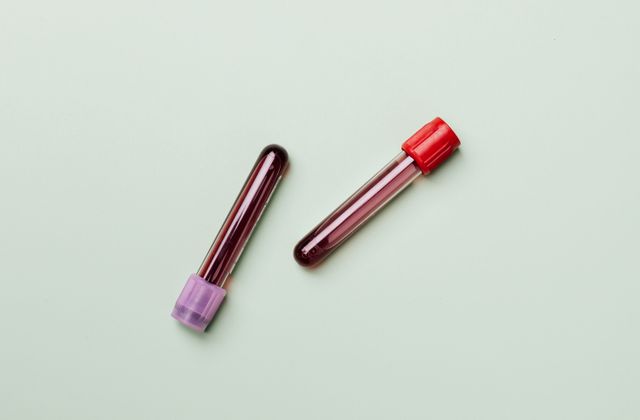
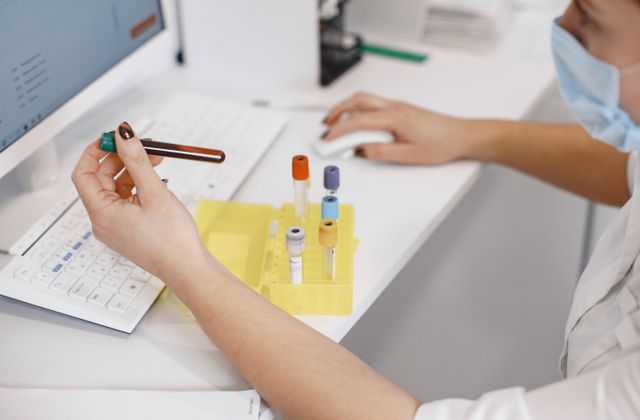
Daily monitoring sounds exhausting until you have seen how simple the draw itself is. A CBC or platelet count needs no fasting, so the phlebotomist can come at whatever hour suits the household, morning or evening. The sample goes into the lavender-top tube, the one with the purple cap, which contains EDTA, the anticoagulant that keeps the blood liquid for counting. The tube gets inverted gently eight to ten times right after the draw to mix the blood with the EDTA. Too little mixing and the sample clots; too rough and the cells break apart. It is a small, practised motion, and a trained phlebotomist does it without thinking.
A few details decide whether the number on the report is trustworthy. The tourniquet should come off within a minute, because a tourniquet left on too long concentrates the blood in the arm and skews the count. After the needle is out, press the cotton ball firmly for two to three minutes; dengue patients bruise easily, and a good press is the difference between a tiny dot and a purple patch that lasts a week. The tube gets a barcode label stuck on at your home, right in front of you, and it travels to the lab the same day. Published stability studies show EDTA platelet counts hold well within same-day transport windows, so a morning draw processed the same day is comfortably inside the science.
One laboratory quirk is worth knowing about because it causes completely unnecessary panic. Sometimes platelets clump together in the EDTA tube, and the analyzer counts the clumps as too few platelets. The report shows a frighteningly low number in a patient who looks perfectly well. This is called pseudothrombocytopenia, and the giveaway is the mismatch between the number and the patient. A good lab spots the clumping under the microscope and either rechecks the sample or redraws it in a different tube. If a platelet count ever looks catastrophic and the patient looks fine, ask whether the sample was checked for clumping before anyone reaches for a decision.
At our lab, home collection for these daily draws is free across Malad, Kandivali, Borivali and Goregaon, the lab runs 24x7, and routine reports are typically ready within about 24 hours. For a family doing daily monitoring, that means the draw happens at your dining table, the label goes on the tube in front of you, and the numbers land on your phone the next day without a single trip to the lab. Booking takes a call on 84250 40353 or a few taps on the test page.
Medicines and the platelet number
What you swallow during dengue matters as much as what the lab measures, because the wrong fever medicine can turn a manageable platelet dip into a bleeding problem. The WHO's guidance is unambiguous on this one.
Fever medicines during dengue
Do: reach for paracetamol (acetaminophen) for fever and body ache. It brings the temperature down without interfering with how platelets do their job, which is exactly what you want when the count is already sliding.
Don't: take aspirin, ibuprofen or any other NSAID for dengue fever. These medicines impair platelet function, and in an illness defined by falling platelets and leaky vessels, that is adding risk on top of risk. This is one of those rules with no grey area: the WHO lists it plainly, and every dengue protocol in the country repeats it.
Getting a clean platelet draw
Do: drink water normally before the draw and keep the arm relaxed. Hydration makes veins easier to find, which means a quicker, cleaner stick and a better sample. Tell the phlebotomist about any blood thinners or regular medicines, and mention if you have had trouble with draws before.
Don't: squeeze or pump your fist repeatedly while the needle is in, and don't skip the firm press on the cotton afterwards. A rushed draw with a tourniquet on too long, or a sample that clots because the tube wasn't mixed, can produce a platelet number that sends everyone chasing a problem that doesn't exist.
Booking it right the first time
Pulling the practical threads together, here is how to spend wisely on dengue testing instead of spending twice.
On days 0 to 5 of fever, the first test worth buying is the dengue NS1 antigen test. It answers the only question that matters early: is this dengue? Pair it with a CBC so the doctor has a baseline platelet count and white cell count to measure everything else against. That two-test start, NS1 plus CBC, covers diagnosis and the opening entry of the monitoring diary in a single needle.
If the fever is already a week old when you get around to testing, skip the NS1 and go for the dengue IgM antibody test instead. Buying an NS1 on day 9 is the classic wasted spend: the marker has largely cleared, and a negative result answers nothing.
When the doctor wants the fuller picture in one draw, that is what the bundled dengue panels are for. The Basic panel (listed at ₹2,049, 29 parameters) wraps the dengue markers together with the blood work; the Advanced panel (listed at ₹3,449, 44 parameters) goes deeper for cases the doctor wants to follow closely. A panel makes sense when the alternative is three separate orders on three separate days, each with its own needle and its own waiting. It makes less sense when the doctor has asked for one specific number and nothing else.
For the monitoring days that follow, the workhorse is the humble platelet count or the CBC, both listed at ₹199. Nobody needs a second NS1 to track platelets. The most expensive mistake in dengue testing is not the premium method; it is the repeated wrong test, ordered out of anxiety rather than on the illness's calendar.
If you are unsure what to book, start from the tests page or call 84250 40353 and describe the day of fever. The day of fever is the single most useful thing you can tell us. It decides the test more reliably than any symptom list, and it is the difference between one well-chosen test and a week of expensive guessing.
References
WHO, "Dengue: Guidelines for Diagnosis, Treatment, Prevention and Control" (2009). WHO, new global guidelines for clinical management of arboviral diseases including dengue (July 2025). CDC, Clinical Testing Guidance for Dengue (updated August 2024). National Center for Vector Borne Diseases Control (India), National Guidelines for Clinical Management of Dengue Fever (2023).
Book these tests at home
Live prices · free home sample collection in Malad, Kandivali, Borivali & Goregaon
Dengue NS1 Antigen
- Report in 12 hrs
- Free home collection
Platelet Count
- Report in 24 hrs
- Free home collection
Complete Blood Count (CBC)
- Report in 12 hrs
- Free home collection
Dengue - IgM (ELISA)
- Report in 24 hrs
- Free home collection
More tests related to this topic
Other Fever tests you can book with free home sample collection.
CRP (C-Reactive Protein)
- Report in 12 hrs
- Free home collection
Anti - CHIKUNGUNYA IgG
- Report in 24 hrs
- Free home collection
Anti - CHIKUNGUNYA IgM
- Report in 24 hrs
- Free home collection
Chikungunya Combo Rapid Test
- Report in 24 hrs
- Free home collection
Chikungunya IgG Rapid antibody
- Report in 24 hrs
- Free home collection
Chikungunya IgM Rapid antibody
- Report in 24 hrs
- Free home collection
Chikungunya RNA Detection by Real Time PCR - EDTA Plasma
- Report in 48 hrs
- Free home collection
Chikungunya RNA Detection by Real Time PCR - Serum
- Report in 48 hrs
- Free home collection
Dengue - IgG (CLIA)
- Report in 24 hrs
- Free home collection
Dengue - IgG (ELISA)
- Report in 24 hrs
- Free home collection
Dengue - IgM (CLIA)
- Report in 24 hrs
- Free home collection
Dengue IgG (Rapid)
- Report in 12 hrs
- Free home collection
Get more from the same visit
Health packages that already include these tests, and tests people usually add.
Frequently asked questions
How much does a dengue test cost in Mumbai?
It depends on the method. On our site right now, rapid cards are listed at Rs 349, ELISA antibody tests at Rs 799, the NS1 antigen test at Rs 949, and bundled dengue panels from Rs 2,049 to Rs 4,149. Prices change, so check the live test page for the current figure.
Is the Rs 349 rapid card as good as the Rs 949 test?
They use different chemistry. The rapid card is fast and convenient; the ELISA version is more sensitive and read by lab instruments. Which suits you depends mostly on the day of fever, so go by the doctor's advice rather than price alone.
Which dengue test should I take on day 2 of fever?
The NS1 antigen test. It detects a viral protein present in the blood during the first week of illness.
Which dengue test works on day 9 of fever?
The IgM antibody test. By day 9 the NS1 marker has usually cleared, so an NS1 test this late can miss the infection.
How often should platelet counts be checked during dengue?
The WHO-backed rhythm is a CBC every day from around day 3 of fever until the doctor says the critical phase has passed. If counts are falling fast, monitoring steps up to every 6 to 8 hours, which usually means hospital-level care.
At what platelet count should I panic?
There is no panic number. Doctors act on the trend across days, the warning signs, and whether there is bleeding. A single low reading in a well patient is very different from falling counts with warning signs.
Can platelet monitoring be done from home?
Yes. A daily CBC or platelet count is a simple venous draw, needs no fasting, and home collection by a trained phlebotomist is established practice. Our home collection is free.
Do I need to fast for a platelet count?
No. Fasting is not required for a CBC or platelet count.
Can I take paracetamol during dengue?
Yes, paracetamol is the WHO-advised option for dengue fever. Avoid aspirin, ibuprofen and other NSAIDs because they impair platelet function and raise bleeding risk.
When is the danger over in dengue?
When platelet counts stabilise and start recovering after the critical phase (usually days 3 to 7), and the doctor confirms it. The fever breaking on its own is not the all-clear.
HWP Diagnostic Editorial Team
Health guides written by the team at HWP Diagnostic, Mumbai, to help you understand your tests before you book. This article is for general education and is not a substitute for medical advice - reference ranges vary between labs, so always discuss your results with your doctor. Read our editorial policy. Photos: Pexels.