Key takeaways
- Two Bundibugyo Ebola cases have been confirmed in North Ubangi, the outbreak's eighth province, according to officials speaking to Reuters and Xinhua. A formal ministry announcement is still pending.
- North Ubangi borders the Central African Republic, putting a new border country at risk for the first time in this outbreak.
- The cases follow suspect deaths in a mining area in Wapinda health zone; samples were analysed at a provincial laboratory and confirmed at the national reference lab in Kinshasa.
- The outbreak now stands at over 9,100 confirmed cases and more than 4,400 deaths, the largest and deadliest in DRC history and the second-largest Ebola outbreak ever recorded.
- WHO still advises against travel and trade restrictions and rates the global risk as low. There are no Ebola cases in India.
- Ebola is diagnosed by PCR only at designated national reference laboratories. Returning travellers with symptoms should contact health authorities first, not walk into a local lab.
- A Phase 2/3 trial of Bundibugyo vaccines is expected to begin before the end of October, while ERVEBO is being used for frontline workers under research protocols.
Book tests from this article
Sample collected at home - free
- Fever Profile
₹1,049₹1,39925% off
- Malaria Antigen Test
₹549₹79931% off
- Complete Blood Count (CBC)
₹199₹59967% off
Free collection 24 hr reports
The outbreak has crossed into a new province, and a new border country is now exposed
The Democratic Republic of Congo's Ebola outbreak has spread to an eighth province. Two cases of the Bundibugyo strain have been confirmed in North Ubangi, a province in the country's northwest that shares a border with the Central African Republic, two health officials told Reuters on Thursday. The cases have not yet been officially announced by Congolese authorities.
If the announcement holds, it would mark the first time this outbreak has touched the Central African Republic's border, and the farthest northwest the virus has travelled since the outbreak was declared in mid-May. It is also the first major geographic expansion since Wednesday, when the World Health Organization reported the virus had reached a 65th health zone, Dakwa in Bas-Uele.

How the news broke
The first public signal came on Wednesday, October 14. Jean-Jacques Mbungani Mbanda, a former DRC health minister who now sits in parliament, wrote on social media that repeated tests at the National Institute of Biomedical Research in Kinshasa had confirmed two Ebola infections in Nord-Ubangi province. He said the health ministry was expected to issue an official statement shortly, according to Xinhua's reporting.
Reuters picked up the story on Thursday, October 15, with two health officials confirming the two cases. A health official in North Ubangi told Reuters there had been a series of suspect deaths recently in a mining area in Wapinda health zone, close to the border with Bas-Uele, and that samples had been sent for analysis at a provincial laboratory and in Kinshasa.
Two independent wire reports pointing to the same two confirmed cases, with lab confirmation attributed to the country's national reference institute, is about as close to confirmed as breaking outbreak news gets before an official announcement. Still, the caveat matters: until the ministry or the WHO publishes the numbers, these two cases are confirmed by officials to reporters, not by an official bulletin.
Where North Ubangi sits, and why it changes the picture
Everything so far in this outbreak has clustered in the east and center of the DRC. The epicentre is Ituri province, which accounts for 73.8 per cent of all confirmed cases. Substantial transmission has also been reported in North Kivu and Haut-Uele, with cases in South Kivu, Tshopo, Bas-Uele and South Ubangi making seven provinces in total as of the WHO's Wednesday report.
North Ubangi is a different geography entirely. It lies in the far northwest, hundreds of kilometres from the eastern hotspots, and it borders the Central African Republic. The Wapinda health zone, where the suspect deaths were reported, sits near the provincial boundary with Bas-Uele, but the new province itself opens a fresh front: a population that has not seen the virus before, and a new international border to monitor.
The mining-area detail is worth paying attention to. Mining areas in the DRC are often corridors of high population movement, with workers and traders travelling long distances on rough roads. That is exactly the kind of setting where contact tracing struggles. Security issues, population displacement and difficulty tracing contacts have already been flagged as the main obstacles in this outbreak by Africa CDC, and a remote mining zone near a provincial border does not make that job easier.
There is also a regional angle that this news forces onto the table. Until now, the cross-border story has been about Uganda and Kenya, both to the east. North Ubangi borders the Central African Republic, and the province's western edge is not far from the South Sudan frontier either. Every new border province multiplies the surveillance workload for the region's health systems. Africa CDC's call for enhanced regional preparedness, issued after Kenya's first imported case, now reads as understated rather than precautionary.
How a confirmation like this actually works
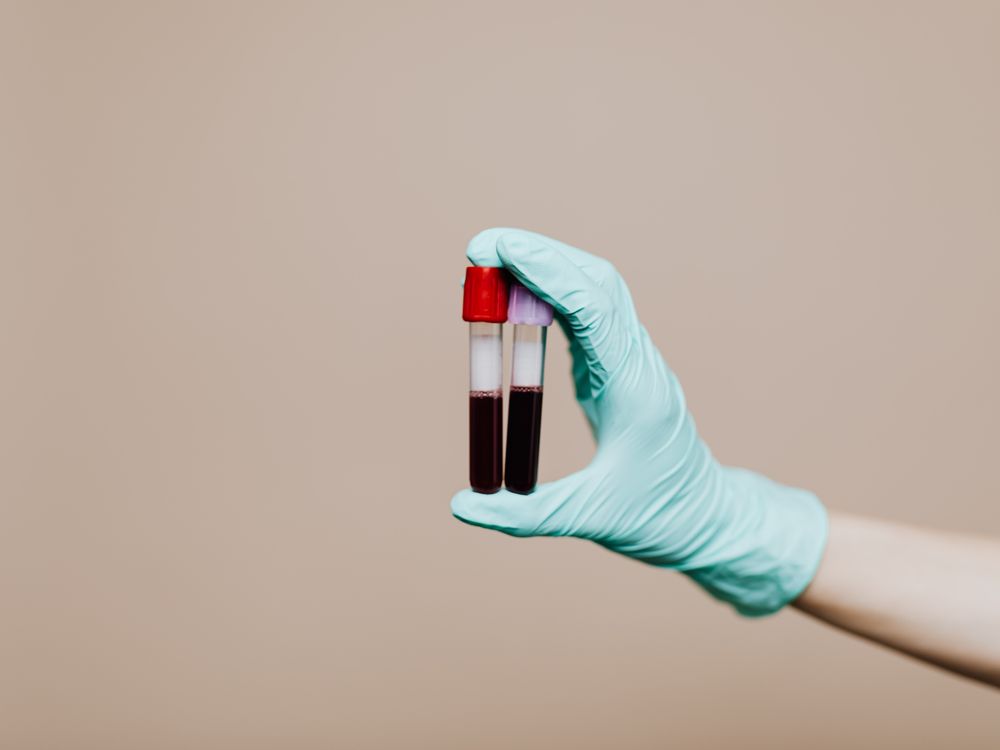
It is worth pausing on the confirmation chain, because the "two health officials said" formulation can sound vague. When suspect deaths are reported in a remote health zone, samples are taken under strict biosafety protocols and sent for PCR testing, first to the provincial laboratory and then, for confirmation, to the National Institute of Biomedical Research in Kinshasa, the country's top reference lab. That is the chain described in the Reuters report: suspect deaths in Wapinda, samples analysed at the provincial lab and in Kinshasa.
The former minister's account adds that the INRB ran repeated tests before confirming the two infections. Running a sample more than once before declaring a positive is standard practice at reference labs precisely because a false declaration of Ebola in a new province has consequences: border measures, market closures, panic. The reason an official announcement may lag the confirmations is partly this verification cycle, and partly the need to get contact tracers and response teams moving before the public hears the news. The lag is normal. What matters is that two independent wires now carry the same confirmed count from different sources.
A quick recap of where the outbreak stands
For anyone catching up, here is the state of play after yesterday's update on Kenya's second imported case:
- The outbreak began in mid-May 2026 and is caused by the Bundibugyo strain of the Ebola virus, a rare strain with no licensed vaccine or specific treatment.
- The DRC Ebola task force's situation report put confirmed cases at 9,066 with 4,381 deaths as of October 11, a case fatality rate of 48.3 per cent. Data published by the European Centre for Disease Prevention and Control on October 14 showed 9,144 confirmed cases and 4,410 deaths. About 2,389 patients have recovered.
- This is now the largest and deadliest Ebola outbreak ever recorded in the DRC, and the second-largest Ebola outbreak in history, after the 2014-2016 West Africa epidemic.
- Ituri remains the principal focus. North Kivu has the highest case fatality rate, at 57.1 per cent.
- Roughly 60 per cent of deaths have occurred in communities rather than treatment centres, and about one-third of all new cases in recent weeks were detected only as community deaths, meaning people who were never found while they were still alive. That is the single most worrying statistic in the response.
- Two imported cases have been confirmed in Kenya, the first a traveller who died in Nairobi on October 5, the second a close family member confirmed October 15. Cases have also been reported in Uganda. A healthcare worker was medically evacuated to the Netherlands on October 1 after testing positive by PCR.
- On the response side, more than 9,000 frontline workers have been vaccinated with ERVEBO, the Zaire-strain vaccine being used under research protocols and compassionate-use arrangements, while the Coalition for Epidemic Preparedness Innovations (CEPI) prepares the Tumaini Phase 2/3 trial of vaccines made for the Bundibugyo strain, expected to begin before the end of October.
- Africa CDC has called this the fastest-growing Ebola outbreak on record.
- In parallel, the DRC is dealing with a major cholera surge: more than 51,412 suspected cholera cases and 1,487 deaths this year across 21 provinces.
We covered the full background, the India travel angle and the testing picture in our original report, Congo's Ebola Outbreak Tops 9,000 Cases.
What the authorities are saying
There is a tension in the official messaging right now. Earlier this month, DRC Health Minister Roger Kamba said the outbreak was becoming increasingly localised, with several affected health zones going weeks without new cases. On October 7, WHO Director-General Tedros Adhanom Ghebreyesus gave a more cautious read: the epidemic was slowing in some areas but continued to grow in others, and he pointed to persistent problems, the high share of deaths occurring in communities and gaps in contact tracing.
The North Ubangi news, if confirmed officially, underlines why Tedros's caution carried weight. An outbreak that is localised in seven provinces is not the same thing as one that keeps finding new ones.
The WHO's risk assessment, as it stands, rates the risk as very high within the DRC, high for bordering countries and low globally. The agency continues to advise against travel and trade restrictions. Bordering countries now include, potentially, the Central African Republic for the first time. Africa CDC has urged enhanced regional preparedness after the Kenya cases.
One line worth keeping from the Reuters report: the two North Ubangi cases have not been officially announced by Congolese authorities. Watch for the ministry's statement, which the former minister said was expected, and for the WHO's next Disease Outbreak News bulletin, which should fold in the eighth province if the confirmation holds.
What this means for readers in Mumbai and India
Nothing in this update changes the picture for the general public in India, and that is worth saying plainly. There are no Ebola cases in India. The Ministry of Health and Family Welfare issued a travel advisory back on May 24, and the Airport Health Organisation (APHO) continues screening arrivals from affected regions. Travellers from central Africa register on the Air Suvidha 2.0 portal, and the standing guidance is a 21-day self-watch after arrival: anyone who develops fever, headache, body pain, vomiting or bleeding within 21 days of being in an affected area should contact health authorities promptly rather than walking into a clinic unannounced.
A practical point about testing: Ebola is diagnosed by PCR at designated national reference laboratories, such as the National Institute of Virology in Pune. It is not, and must not be, tested at a regular commercial lab. If you return from the DRC or a neighbouring country feeling unwell, do not go to a local lab and ask for an Ebola test. Call the health authorities first, and let them direct the sample to the right facility. Routine labs are not set up to handle Ebola samples safely, and misrouted samples create risk for everyone in the chain.
For ordinary travellers the risk assessment has not moved. WHO still advises against travel and trade restrictions, and it still rates the global risk as low. The news that matters is the direction of the curve: this outbreak keeps expanding its geography, and the response keeps racing to catch up.
The symptoms and how it spreads, briefly
Ebola's incubation period is 2 to 21 days. Early symptoms look like many other tropical fevers: sudden fever, headache, muscle and joint pain, sore throat and weakness. That is followed by vomiting, diarrhoea, rash and, in some patients, impaired kidney and liver function and bleeding, both internal and external.
It spreads through direct contact with the blood or body fluids of a person who is sick with or has died from Ebola, and through contact with objects contaminated with those fluids. It does not spread through the air. Health workers, burial teams and family caregivers are at the highest risk. A person is not infectious until symptoms appear, which is why the 21-day watch after exposure is the standard.
If you are planning travel anywhere in central Africa for work, the sensible steps are unglamorous: avoid contact with sick people, avoid handling or eating bushmeat, wash hands frequently, and keep a note of any clinics you visited and people you spent time with. On return, the 21-day watch and the registration requirement are the system working as designed. Use it.
One more practical note for travellers, and it is an important distinction. Most fevers after travel are not Ebola. They are malaria, dengue, typhoid or ordinary viral fevers, and for those, ordinary lab testing is exactly the right move. HWP's fever profile covers the common suspects, a malaria antigen test rules malaria in or out quickly, and a complete blood count shows how the infection is affecting your system. The fork in the road is exposure: a routine post-travel fever goes to a lab, but fever after possible Ebola contact goes to the health authorities first. Know which road you are on before you book a test.
What we are watching next
- The DRC health ministry's official statement on the North Ubangi cases, which the former minister said was expected shortly.
- The WHO's next Disease Outbreak News update: whether it lists eight provinces and a new case count.
- Any response from the Central African Republic, which would be a new border country at risk if the two cases are confirmed.
- A third case in Kenya, or a first case in any additional country.
- The Tumaini Phase 2/3 Bundibugyo vaccine trial, expected to begin before the end of October.
- Any change to the Indian government's travel advisory or airport screening posture.
References
- Reuters, "Ebola confirmed in eighth province in Congo, sources say," October 15, 2026.
- Xinhua (via IANS/Daijiworld), "Ebola outbreak may spread to eighth province in DR Congo, two cases reported," October 14, 2026.
- TRT World, "Ebola outbreak spreads to new health zone in DRC: WHO," October 15, 2026 (WHO Africa regional bureau briefing).
- DRC Ebola task force situation report, October 13/14 (via qazinform: 9,144 confirmed cases, 4,410 deaths).
- Africa CDC assessment, via WAM/qazinform, October 2026.
- WHO Director-General's remarks, October 7, 2026 (via Xinhua reporting).
Book these tests at home
Live prices · free home sample collection in Malad, Kandivali, Borivali & Goregaon
Fever Profile
- Report in 48 hrs
- Free home collection
Malaria Antigen Test
- Report in 12 hrs
- Free home collection
Complete Blood Count (CBC)
- Report in 12 hrs
- Free home collection
More tests related to this topic
Other Fever tests you can book with free home sample collection.
CRP (C-Reactive Protein)
- Report in 12 hrs
- Free home collection
Anti - CHIKUNGUNYA IgG
- Report in 24 hrs
- Free home collection
Anti - CHIKUNGUNYA IgM
- Report in 24 hrs
- Free home collection
Chikungunya Combo Rapid Test
- Report in 24 hrs
- Free home collection
Chikungunya IgG Rapid antibody
- Report in 24 hrs
- Free home collection
Chikungunya IgM Rapid antibody
- Report in 24 hrs
- Free home collection
Chikungunya RNA Detection by Real Time PCR - EDTA Plasma
- Report in 48 hrs
- Free home collection
Chikungunya RNA Detection by Real Time PCR - Serum
- Report in 48 hrs
- Free home collection
Dengue - IgG (CLIA)
- Report in 24 hrs
- Free home collection
Dengue - IgG (ELISA)
- Report in 24 hrs
- Free home collection
Dengue - IgM (CLIA)
- Report in 24 hrs
- Free home collection
Dengue - IgM (ELISA)
- Report in 24 hrs
- Free home collection
Get more from the same visit
Health packages that already include these tests, and tests people usually add.
Frequently asked questions
Has Ebola really reached an eighth province?
Two health officials confirmed two cases in North Ubangi to Reuters on October 15, and a former DRC health minister said on October 14 that the national reference lab in Kinshasa confirmed the infections. Congolese authorities had not yet issued an official announcement at the time of writing, so the ministry's statement and the WHO's next update are the confirmations to watch for.
What is the Bundibugyo strain of Ebola?
Bundibugyo is one of the six known Ebola virus species. It is rarer than the Zaire strain and currently has no licensed vaccine or specific treatment. In this outbreak the case fatality rate stands at about 48.3 per cent.
Is India at risk from this outbreak?
No Ebola cases have been reported in India. The Ministry of Health and Family Welfare issued a travel advisory on May 24, airport health authorities screen arrivals from affected regions, and travellers returning from central Africa are registered on the Air Suvidha 2.0 portal with a 21-day self-watch for symptoms.
Can I get an Ebola test at HWP or another local lab?
No. Ebola is diagnosed by PCR only at designated national reference laboratories such as the National Institute of Virology in Pune. If you have travelled to an affected region and develop symptoms within 21 days, contact the health authorities first and let them direct the sample to the right facility.
How does Ebola spread?
Ebola spreads through direct contact with the blood or body fluids of a person who is sick with or has died from the disease, and through objects contaminated with those fluids. It does not spread through the air, and a person is not infectious until symptoms appear.
What are the symptoms of Ebola?
After an incubation period of 2 to 21 days, symptoms start with sudden fever, headache, muscle and joint pain, sore throat and weakness. Vomiting, diarrhoea and rash usually follow, and some patients develop impaired kidney and liver function and bleeding.
Should I cancel travel to Africa?
WHO continues to advise against travel and trade restrictions and rates the global risk as low. If you do travel to central Africa for work, register on arrival protocols, avoid contact with sick people and bushmeat, keep track of your contacts, and follow the 21-day watch on return.
Is there a vaccine for the Bundibugyo strain?
Not yet. The Zaire-strain vaccine ERVEBO is being given to frontline workers under research protocols, but it was not designed for Bundibugyo. The CEPI-backed Tumaini Phase 2/3 trial of Bundibugyo-specific vaccines is expected to begin before the end of October.
HWP Diagnostic Editorial Team
Health guides written by the team at HWP Diagnostic, Mumbai, to help you understand your tests before you book. This article is for general education and is not a substitute for medical advice - reference ranges vary between labs, so always discuss your results with your doctor. Read our editorial policy. Photos: Pexels.