
Key takeaways
- The CDC now counts 9,235 confirmed cases and 4,444 confirmed deaths as of October 15, with nearly all in the DRC.
- This is the second-largest Ebola outbreak on record and, by the CDC's numbers, the fastest-growing one.
- Frontline workers in Beni received the Ervebo vaccine on October 16 under a compassionate-use program; the WHO approved 70,000 doses, with 20,000 reserved for a clinical trial.
- There is still no licensed vaccine or treatment developed specifically against the Bundibugyo strain; the Tumaini Phase 2/3 trial is expected before the end of October.
- New U.S. travel rules bar travelers who were in the DRC within 21 days from boarding commercial flights to the United States.
- Kenya's three cases remain a single contained family cluster; 127 of 130 contacts have been traced and quarantined.
- There are no Ebola cases in India; fever after travel to the region is far more likely to be malaria or dengue, which standard lab tests can sort out.
Book tests from this article
Sample collected at home - free
- Fever Profile
₹1,049₹1,39925% off
- Malaria Antigen Test
₹549₹79931% off
- Complete Blood Count (CBC)
₹199₹59967% off
Free collection 24 hr reports
A new milestone, and it is not the kind anyone wanted
Five months after the Democratic Republic of Congo declared a Bundibugyo Ebola outbreak in Ituri province, the case count has crossed another threshold. The U.S. Centers for Disease Control and Prevention (CDC) now puts the outbreak at 9,235 confirmed cases and 4,444 confirmed deaths, based on data as of October 15, 2026. Of that total, 9,212 cases and 4,441 deaths are in the DRC itself.
That makes this the second-largest Ebola outbreak ever recorded, behind only the 2014-2016 West Africa epidemic that killed more than 11,000 people across Guinea, Liberia and Sierra Leone. It is also, according to the CDC, spreading substantially faster than any previous Ebola outbreak: this one passed 1,000 confirmed cases within 40 days of response activation, while the 2018 DRC outbreak needed roughly 235 days to reach the same point.
The jump is large even by the standards of this outbreak. The new CDC tally is 485 more cases and 236 more deaths than the 8,750 cases and 4,208 deaths reported just a few days earlier. We tracked the last official figures in our previous update: the DRC's own task force sitrep put the count at 9,066 cases and 4,381 deaths as of October 11, and the European Centre for Disease Prevention and Control reported 9,277 confirmed cases and 4,478 deaths based on data through October 14. The different agencies count on slightly different clocks, which is why the numbers never line up exactly, but they all point the same way: the curve is still rising.
The CDC has plotted its epidemic curve, built from DRC national health data and WHO information, against the two earlier giants of Ebola history: the 2014 West Africa outbreak and the 2018 DRC outbreak, measured across the first 180 days of each. That comparison is what makes the agency's "spreading substantially faster" judgment worth taking seriously. West Africa had the advantage of time; this outbreak is accumulating cases at a pace that compressed years of earlier experience into months. Speed matters because everything in an Ebola response, contact tracing, vaccination rings, treatment centers, safe burials, degrades when the case count doubles faster than the response can scale.
The CDC's figures reflect the outbreak's standing as the DRC's 17th Ebola outbreak and the deadliest of all 17 in the country's history.
Frontline workers vaccinated in Beni
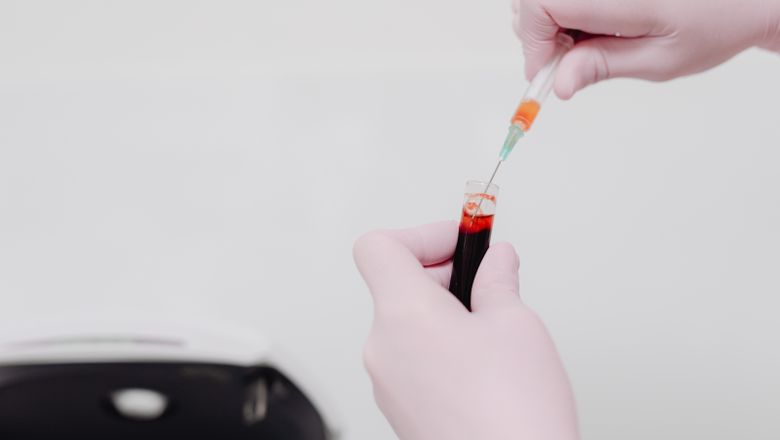
Alongside the new count came one of the few pieces of good news this outbreak has produced. On Friday, October 16, health care and other frontline workers in Beni, in North Kivu province, received the Ervebo vaccine, according to reporting from the Associated Press.
Ervebo was developed against the Zaire strain of Ebola, the more common one. Bundibugyo is a related but different virus, and whether Ervebo can actually prevent illness in people infected with Bundibugyo is still being studied. That is why the vaccine is being used under a compassionate-use program, which allows a medical product to be deployed in a serious disease situation even though it has not been specifically approved for that particular use. Health authorities say Ervebo could offer some protection against Bundibugyo because the two viruses are related, but the evidence is not in yet.
For the nurses and doctors treating Ebola patients every day, that uncertainty is worth it. "I'm happy to have received it because I know it gives me some reassurance since I'm always around patients," said Stella Nyota, a nurse in Beni.
The doses come from a stockpile the WHO approved for Congo back in August: 70,000 doses of Ervebo in total. About 50,000 of those are intended for frontline and health care workers, while 20,000 are reserved for a clinical trial that will formally test whether the vaccine protects against the Bundibugyo virus causing the current outbreak. There is still no licensed vaccine or treatment developed specifically against Bundibugyo; the dedicated Tumaini Phase 2/3 vaccine trial is expected to begin before the end of October.
Violence against health workers and shortages of protective equipment have already led to infections among medical staff treating patients, and a health workers' strike has complicated the response. Vaccinating the people on the wards is both a morale measure and a practical one.
Dr. Mohamed Janabi, the WHO's regional director for Africa, struck a determined note. "Yes, we don't have vaccines, we don't have licensed therapeutics, but we have life supporting services. Like if your blood has gone down, we can give you blood. If your oxygen is not very good, we can give you oxygen. If you have an infection, we will give you antibiotics. So the chances of survival are not theories." Janabi also announced that 2,400 people have survived Ebola during this outbreak, a reminder that early, aggressive supportive care saves lives.
The WHO has nevertheless said the outbreak remains out of control and is on track to surpass the 2014-2016 West Africa epidemic in scale.
New U.S. travel restrictions
The CDC also issued fresh travel guidance tied to the outbreak. Travelers who were in the DRC within 21 days of their flight will not be allowed to board commercial flights to the United States. U.S. citizens and nationals who have been in the DRC should remain outside the country for 21 days before entering the U.S. People who were in Uganda or South Sudan, but not the DRC, within 21 days of arrival must enter through designated airports for enhanced screening.
The CDC recommends avoiding all travel to Ituri and Nord-Kivu provinces and avoiding nonessential travel to Haut-Uele and Tshopo provinces. Travelers to other parts of the DRC or Uganda should take enhanced precautions and monitor for symptoms for 21 days after leaving. About 500 CDC staff are involved in the response, including more than 120 deployed to affected countries. No cases linked to the outbreak have been confirmed in the United States, and the CDC considers the overall risk to the American public low.
Kenya: three contacts still being traced
In Kenya, where three Ebola cases were confirmed this month, the health ministry says all 130 contacts of the patients have been identified. Of these, 127 have been traced and placed under quarantine, while efforts continue to locate the remaining three, according to ministry statements carried by multiple outlets on October 17.
All three Kenyan cases belong to a single family cluster in Nairobi: the first patient, a businessman who traveled from the DRC, died on October 5, and his two close relatives, including a 65-year-old woman who tested positive on October 16, were already in quarantine when they developed symptoms. The ministry says there is no evidence of the virus spreading in the wider community. We covered the confirmation of the third case in our last update. The fact that all three cases were already in quarantine when they tested positive is exactly what containment is supposed to look like: contacts identified, watched and isolated before they could seed new chains.
Where things stand
A quick recap of the full picture, with the new pieces folded in:
The count. CDC: 9,235 confirmed cases, 4,444 confirmed deaths as of October 15. DRC task force: 9,066 cases, 4,381 deaths as of October 11, with a case fatality rate around 48 percent. ECDC: 9,277 confirmed cases, 4,478 deaths based on data through October 14. Different clocks, same direction.
The geography. The CDC lists confirmed cases in seven DRC provinces: Bas-Uele, Haut-Uele, Ituri, Nord-Kivu, Sud-Kivu, Sud-Ubangi and Tshopo. Ituri remains the principal focus. Notably, the health ministry has still not issued its promised official announcement about the two North Ubangi cases that Reuters reported on October 15, and the CDC's listed province count remains at seven. South Kivu has reported no confirmed cases since May 29. Uganda's separate Bundibugyo outbreak, which totaled 20 confirmed cases, was declared over in July, and the last patient in France was released in early July.
The hardest-hit groups. Ituri's provincial education officials confirmed this week that 25 Ebola cases, including 10 deaths, have been recorded among schoolchildren. WHO's incident managers say roughly a third of recent new cases are community deaths, meaning people dying without reaching treatment, and that nearly 60 percent of all deaths are happening in communities rather than in treatment centers. MSF data from North Kivu shows children, especially infants, are suffering disproportionately, with some children likely infected inside health care facilities.
The vaccines and trials. Frontline vaccination with Ervebo is underway in Beni under compassionate use. The Tumaini Phase 2/3 trial of a dedicated Bundibugyo vaccine candidate is expected to start before the end of October. Around 9,000 frontline workers have already been vaccinated with ERVEBO under research protocols.
The response machinery. WHO scaled up Ebola readiness across 22 countries and territories in the eastern Mediterranean region in mid-October, prioritizing Djibouti, Somalia and Sudan. WHO's standing risk assessment, very high within the DRC, high for bordering countries and low globally, has not changed in this reporting round. DRC health minister Samuel Roger Kamba has publicly warned aid organizations to disclose their funding or face being barred from the response, after Africa CDC reported a large gap between the roughly $962 million disbursed by donors and the $228 million acknowledged by response organizations.
What this means for readers in India
There are still no Ebola cases in India in this outbreak. The health ministry's travel advisory of May 24 remains the standing guidance, with airport health screening by APHO teams and the Air Suvidha 2.0 self-declaration portal for arriving travelers. The standard advice holds: watch for fever, headache, body aches, vomiting, diarrhea or unexplained bleeding for 21 days after travel to an affected area.
Here is the practical part. If you or someone returning from the region develops a fever, the most likely causes are the infections that are common on both sides of the Indian Ocean: malaria, dengue, typhoid or a routine viral illness. A fever profile, a malaria antigen test and a complete blood count (CBC) are the right first steps, exactly as we explained in our original Ebola explainer and our Kenya second-case update.
Ebola PCR testing, the test that actually confirms Ebola, is available only at designated national reference laboratories such as NIV Pune. No commercial lab in Mumbai, including ours, performs it, and you should never walk into a walk-in lab with suspected Ebola exposure. If the exposure history and symptoms point that way, contact health authorities first; they route the sample safely and handle the public health response.
What we are watching next
- The DRC health ministry's official statement on the two North Ubangi cases, and whether the province count officially rises to eight.
- The next WHO Disease Outbreak News update: does the case curve bend, and does the risk assessment change?
- The start of the Tumaini Bundibugyo vaccine trial and any interim results from the Ervebo compassionate-use cohort.
- A fourth Kenya case, or the first imported case in any other country.
- Whether the three untraced Kenyan contacts are found and test negative.
- Any change to India's MoHFW advisory or a first imported case in India.
- Whether this outbreak, now the second-largest on record, edges toward the 2014-2016 West Africa toll.
We will update this story as those triggers hit.
References
- CDC via ContagionLive, "Ebola Outbreak in DRC Tops 9235 Confirmed Cases, CDC Reports," published October 17, 2026, citing the CDC Ebola Outbreak Situation Summary, data as of October 15, 2026.
- ContagionLive, "FAQ: Ebola Prevention, Treatment and the Chances of a US Outbreak," October 17, 2026.
- The Associated Press via Breaking Africa News, "Frontline workers in DRC receive Ervebo vaccine amid growing Ebola outbreak," October 17, 2026.
- Africanews via ImNews, corroborating coverage of the Beni vaccination drive and WHO dose approvals, October 17, 2026.
- Kenya Health Ministry statements carried by thepeacetoday and healthandfamily.in on Kenya contact tracing, October 17, 2026.
- ChimpReports, citing CDC October 15 data, corroborating the DRC breakdown of 9,212 cases and 4,441 deaths.
Book these tests at home
Live prices · free home sample collection in Malad, Kandivali, Borivali & Goregaon
Fever Profile
- Report in 48 hrs
- Free home collection
Malaria Antigen Test
- Report in 12 hrs
- Free home collection
Complete Blood Count (CBC)
- Report in 12 hrs
- Free home collection
More tests related to this topic
Other Fever tests you can book with free home sample collection.
CRP (C-Reactive Protein)
- Report in 12 hrs
- Free home collection
Anti - CHIKUNGUNYA IgG
- Report in 24 hrs
- Free home collection
Anti - CHIKUNGUNYA IgM
- Report in 24 hrs
- Free home collection
Chikungunya Combo Rapid Test
- Report in 24 hrs
- Free home collection
Chikungunya IgG Rapid antibody
- Report in 24 hrs
- Free home collection
Chikungunya IgM Rapid antibody
- Report in 24 hrs
- Free home collection
Chikungunya RNA Detection by Real Time PCR - EDTA Plasma
- Report in 48 hrs
- Free home collection
Chikungunya RNA Detection by Real Time PCR - Serum
- Report in 48 hrs
- Free home collection
Dengue - IgG (CLIA)
- Report in 24 hrs
- Free home collection
Dengue - IgG (ELISA)
- Report in 24 hrs
- Free home collection
Dengue - IgM (CLIA)
- Report in 24 hrs
- Free home collection
Dengue - IgM (ELISA)
- Report in 24 hrs
- Free home collection
Get more from the same visit
Health packages that already include these tests, and tests people usually add.
Frequently asked questions
How many Ebola cases are there in the DRC now?
The CDC's latest count is 9,235 confirmed cases and 4,444 confirmed deaths as of October 15, 2026. The DRC's own task force reported 9,066 cases and 4,381 deaths as of October 11, and the European CDC reported 9,277 confirmed cases and 4,478 deaths based on data through October 14. The agencies count on slightly different clocks, but all show the curve still rising.
What does 'second-largest Ebola outbreak on record' mean?
It means this Bundibugyo outbreak has surpassed every Ebola outbreak in history except the 2014-2016 West Africa epidemic, which killed more than 11,000 people. It is also spreading faster: it passed 1,000 cases within 40 days of response activation, versus about 235 days for the 2018 DRC outbreak.
Is there a vaccine for Bundibugyo Ebola?
Not yet. Ervebo, the vaccine being given to frontline workers in Beni, was developed for the Zaire strain. It is being used under a compassionate-use program because the two viruses are related, but whether it actually protects against Bundibugyo is still being studied. A dedicated Tumaini Phase 2/3 vaccine trial is expected to start before the end of October.
What is Ervebo, and why is it being used against a different strain?
Ervebo is a licensed vaccine against Ebola Zaire virus that proved effective in previous outbreaks. Because the Bundibugyo and Zaire viruses are related, health authorities believe Ervebo could offer some protection against Bundibugyo. The WHO approved 70,000 doses for Congo; about 50,000 go to frontline and health workers and 20,000 are reserved for a clinical trial that will formally test protection.
Has the outbreak spread outside the DRC?
Kenya has confirmed three imported cases, all in one family cluster in Nairobi, with no evidence of wider community spread. Uganda's separate Bundibugyo outbreak was declared over in July, and a single earlier case in France has been released. No cases have been confirmed in the United States, and there are no Ebola cases in India.
What should I do if I come back from the region with a fever?
Watch for symptoms for 21 days after travel. Fever on return is far more likely to be malaria, dengue, typhoid or a routine viral illness, so a fever profile, a malaria antigen test and a complete blood count are the right first steps. If the exposure history and symptoms point toward Ebola, contact health authorities first rather than walking into a lab.
Can a regular diagnostic lab in Mumbai test for Ebola?
No. Ebola PCR testing is available only at designated national reference laboratories such as NIV Pune. No commercial lab in Mumbai, including ours, performs Ebola PCR. Suspected exposure cases must be routed through health authorities so samples are handled safely.
How long should travelers watch for symptoms after returning?
21 days, which is the outer limit of Ebola's incubation period. The CDC and WHO both use this window: the CDC bars travelers who were in the DRC within 21 days from boarding US-bound commercial flights, and India's advisories recommend a 21-day symptom watch after travel to an affected area.
Has the outbreak reached an eighth province?
Two cases in North Ubangi, which borders the Central African Republic, were reported by Reuters on October 15 based on health officials, but the DRC health ministry has still not issued its official announcement. The CDC's listed province count remains at seven pending that confirmation.
Will this outbreak surpass the 2014-2016 West Africa epidemic?
The WHO has said the outbreak remains out of control and is on track to do so. It would need roughly 20,000 cases to overtake the West Africa toll. With the count at 9,235 and still rising, that is not a certainty, but the WHO's warning is why the response is being scaled up.
HWP Diagnostic Editorial Team
Health guides written by the team at HWP Diagnostic, Mumbai, to help you understand your tests before you book. This article is for general education and is not a substitute for medical advice - reference ranges vary between labs, so always discuss your results with your doctor. Read our editorial policy. Photos: Pexels.