Key takeaways
- Prolactin is the milk-making hormone; high at the wrong time, it disturbs periods, fertility and libido in women and men.
- The sample belongs in the morning, a couple of hours after waking, given rested and calm; sleep, exercise, stress, and breast stimulation all nudge the number.
- Many ordinary medicines raise prolactin, so tell your doctor the full list before anyone reads too much into a high number.
- A mildly high result with no symptoms is usually repeated on a calmer day, not acted on; macroprolactin can explain a high number with zero symptoms.
- Ranges vary by laboratory; non-pregnant women usually sit under about 25 ng/mL, men lower, and pregnancy climbs many-fold.
- It is one ordinary blood tube drawn at home; free home collection covers Malad, Kandivali, Borivali and Goregaon, reports in about 24 hours, bookings on 84250 40353.
Book tests from this article
Sample collected at home - free
- Prolactin
₹699₹94926% off
- Luteinizing Hormone (LH)
₹599₹79925% off
- Follicle Stimulating Hormone (FSH)
₹599₹79925% off
Free collection 24 hr reports
You've probably never heard of prolactin. Most people haven't, until a doctor writes it on a prescription slip and suddenly you're searching for a hormone you can't pronounce.
So here is the whole thing, end to end: what the test is, why it was ordered for you, how to prepare so the number is trustworthy, what the result means, and what happens after. No medical degree needed.
The short answer: what this test is really checking
The prolactin test measures how much prolactin is circulating in your blood. Prolactin is a hormone made by the pituitary gland, a pea-sized structure at the base of your brain that directs a surprising amount of your body's daily business.
Prolactin has one famous job: after childbirth, it tells the breasts to make milk. But your pituitary makes it all the time, in smaller amounts, in women and in men. When the level is right, nothing happens and nobody thinks about it. When it's too high at the wrong time, it starts interfering with the reproductive hormones, and that is when periods go irregular, fertility stalls, libido fades, or milk appears where no milk should be.
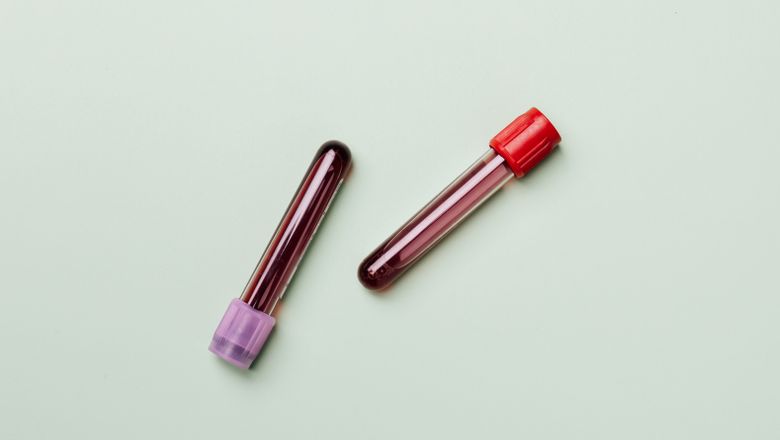
That interference is the reason your doctor ordered the test. The test itself is simple: one tube of blood, one number, and a fair amount of detective work around it. It is also cheap and quick, which is why doctors reach for it early in fertility and menstrual workups rather than after months of guessing.
Prolactin's day job, and its moonlighting
The pituitary is the body's control room. It sends chemical instructions to the thyroid, the adrenals, the ovaries and testes, and a lot of this runs on a simple principle: one hormone telling another hormone what to do. Prolactin fits into that chain in a specific spot.
Its main role, beyond breastfeeding, is surprisingly quiet. In non-pregnant women and in men, the body keeps prolactin low on purpose. The hypothalamus, the brain region sitting just above the pituitary, constantly applies a brake to it using the messenger dopamine. Think of dopamine as the hand on the dial, keeping prolactin turned down. When the brake lifts, during pregnancy, during breastfeeding, during sleep, prolactin climbs. When something jams the brake or presses the accelerator by accident, levels climb at the wrong times, and the reproductive system feels it first.
One thing worth knowing early: there is no known useful function for prolactin in men. It is present in small amounts, and that is where it should stay. A high number in a man is worth the same careful look as in a woman.
Also worth knowing: prolactin is not a steady number like, say, your blood group. It pulses through the day. It rises while you sleep, peaks in the early morning hours, and settles down a few hours after you wake up. That daily rhythm is the single most useful fact in this entire article, because it decides when you should give your sample. We will come back to it.
The morning rule: why this test cares about your alarm clock
Most blood tests don't care what time you arrive. This one does.
Because prolactin climbs overnight and drifts down after waking, the most reliable reading comes from a morning sample taken a couple of hours after you wake up. The common guidance, which lines up across endocrine prep advice, is roughly this: wake up, go about your morning calmly, and give the sample two to three hours later, usually somewhere between 8 and 10 in the morning. Not the minute you roll out of bed. Not at midnight. A relaxed mid-morning.
The second half of the rule is rest. Sit quietly for a while before the needle goes in. At our lab in Malad, we see the difference this makes every single week. Someone rushes in, flustered, after sprinting for a train, and the number comes back slightly high. The same person, same test, on a calm morning, and the number sits comfortably in range. A relaxed sample is not a courtesy to the phlebotomist. It is part of the test.
So when you book, ask for a morning slot. Booking details sit at the end of this article; for this particular test, a morning appointment is the smart pick.
Everything that quietly pushes the number up
Prolactin is jumpy. A long list of ordinary things can lift it temporarily, and a temporary lift looks exactly like a real problem on a report. This is why the preparation matters more here than for most blood tests.
Sleep is the big one. Prolactin rises during sleep, so a sample taken minutes after waking reads higher than the same person's level an hour later. Shift workers and anyone with a chaotic sleep schedule should mention it, because the morning rule is really about "a few hours after your sleep ends," not the clock on the wall.
Exercise counts too. A hard workout the same morning, or a genuinely strenuous day before, can push the number up. You don't need to become a monk for a week, but skip the intense gym session on test morning and don't book the draw right after a long run.
Stress does it as well, and this is the cruel irony of blood tests: the anxiety about the test can inflate the test. An argument on the phone, a panicked dash through traffic, white-coat nerves at the sight of the needle, all of it nudges prolactin. We mentioned the Malad counter pattern above, and it is real. Patients often ask us, "Could my result be wrong because I was nervous?" Sometimes, yes. That is exactly why mildly high results get repeated on a calmer day instead of acted on immediately.
Breast and nipple stimulation is another one, and this catches people off guard. Stimulation of the breast tissue, including from intimacy the night before, can raise prolactin. Avoid it for about 24 hours before the test. Same logic applies to a breast examination at a doctor's clinic the day before the draw.
Meals are a smaller, disputed factor. A big high-protein meal can nudge the number slightly in some people, which is why some doctors' slips mention fasting while others don't. This is the honest truth about fasting for prolactin: it is genuinely disputed across authorities. Food fasting usually isn't required, but some labs do ask for a morning fast, so follow the instructions on your test order. If your slip says fasting, follow the slip. If it doesn't, a normal light routine is fine. Your lab's protocol and your doctor's order are the final word here.
The takeaway from all of this: a high prolactin number is a starting point for questions, not a verdict. The first question is always, "How clean was the sample?" The second is, "What was going on in this person's life the morning of the draw?"
Medicines deserve their own conversation
If there is one cause of high prolactin that people underestimate, it is their own medicine cabinet. Medicines are the most common non-tumor cause of raised prolactin, and the list is longer than most people expect.
The biggest offenders are certain medicines used for mental health conditions, particularly the antipsychotic group. These drugs work partly by blocking dopamine, and remember the brake: dopamine is what keeps prolactin turned down. Block the brake and prolactin rises. Studies summarized in the Endocrine Society's guideline found raised prolactin in a large share of people on these medicines, in some cases the majority.
But they are far from alone. Antidepressants, certain blood pressure medicines, medicines for nausea and vomiting, some painkillers that contain opioids, and hormonal contraceptives can all raise prolactin.
This is why the first thing a good doctor does with a high prolactin result is not order a scan. It is ask, "What are you taking?" Bring the full list, including over-the-counter stuff and anything you take occasionally. A medicine you forgot to mention can send everyone down the wrong path.
One caution that matters: never stop a prescribed medicine on your own because of a lab result. If a drug is the suspect, your doctor will weigh the options, which might mean switching to an alternative, pausing it briefly under supervision, or simply accepting the raised prolactin as a known side effect and watching it. That decision belongs to the prescribing doctor, not to the lab report.
The high-prolactin symptoms list, for women and for men
Nobody orders this test without a reason. The reasons usually sound like one of these:
For women:
- Periods that have turned irregular, unusually light, or stopped altogether
- Milky discharge from the nipples when you are not pregnant and not breastfeeding (doctors call this galactorrhea)
- Trouble conceiving after months of trying
- Lower interest in sex, or new vaginal dryness and discomfort
- Sore or tender breasts outside the usual cycle pattern
For men:
- Lower sex drive, or difficulty with erections
- Breast tissue enlargement (gynecomastia), sometimes with a small amount of discharge
- Infertility, or a low sperm count found during a workup
- Less body and facial hair than before, or shrinking muscle mass
For anyone:
- Headaches that are new or changing, or trouble with side vision (more on why below)
- Over the long term, thinning bones, because sex hormones protect bone and high prolactin suppresses them
Notice how many of these overlap with a dozen other conditions. Irregular periods can be thyroid, PCOS, stress, perimenopause. Low libido can be anything. That is precisely why the test exists: it rules one suspect in or out quickly, so the doctor stops guessing.
A note for postmenopausal women and for men in general: the classic early-warning signs in younger women, the missed periods, the discharge, don't apply. So symptoms tend to show up later, when something has grown large enough to cause headaches or vision trouble. It does not mean the situation is worse. It just means the body gave fewer early hints.
How excess prolactin scrambles periods and fertility
This is the mechanism worth understanding, because it explains almost the entire symptom list in one chain.
High prolactin interferes with the brain's reproductive signaling. The hypothalamus normally releases its messengers in rhythmic pulses, which tell the pituitary to release LH and FSH, which in turn tell the ovaries or testes to do their jobs. Excess prolactin disrupts those pulses. LH and FSH drop. In women, ovulation becomes irregular or stops, estrogen falls, and periods thin out or vanish. In men, testosterone falls, and with it libido, erectile function, and sperm production.
That is also why your doctor often orders prolactin alongside the LH test and the FSH test. The three are choreographed by the same part of the brain, so reading them together shows whether the reproductive chain is intact or whether prolactin is jamming it. The FSH, LH & Prolactin panel bundles exactly these three into one draw and one report, which is why so many fertility workups start there instead of with three separate appointments.
The hopeful part of this chain: it is often reversible. When prolactin comes back down, whether by treating the cause or adjusting a medicine, the signaling usually recovers and cycles return.
Doctors see this pattern routinely. It is one of the more satisfying fixes in endocrinology, which is why getting the number right matters so much.
Macroprolactin: the harmless impostor in the test tube
Here is a twist most people never hear about, and it explains a genuinely confusing situation: a high prolactin number in someone with no symptoms at all.
Prolactin in the blood doesn't always travel alone. Sometimes it binds to an antibody and forms a large, clumsy complex called macroprolactin, literally "big prolactin." The lab's testing method still counts it as prolactin, so the number comes back high. But the bulky complex can't properly fit the body's prolactin receptors, so it does almost nothing. The person feels completely fine: regular periods, no discharge, normal fertility. Just a scary number on a report.
This isn't rare trivia. When a mildly or moderately high result shows up in an otherwise healthy, symptom-free person, macroprolactin is one of the first things an endocrinologist considers. The check is straightforward: the lab treats the sample with a substance (polyethylene glycol) that pulls the big complexes out, then measures what's left. If most of the "prolactin" disappears in that step, it was macroprolactin all along, and no treatment is needed. The person goes home with an explanation instead of a diagnosis.
Two confusions to clear up. Macroprolactin, the harmless big molecule, is not the same as macroprolactinoma, which is a large prolactin-secreting pituitary tumor. Similar words, completely different meanings. And macroprolactin is a lab-side answer to a lab-side puzzle: if your result is high but your body insists everything is fine, ask your doctor whether this check was done before anyone talks about scans or treatment.
The "tumor" word that scares everyone
At some point, almost everyone with a high prolactin result Googles it and lands on the word "tumor." Let's put that word in its proper place.
A prolactinoma is a growth of the prolactin-making cells of the pituitary gland. It is the most common type of hormone-secreting pituitary tumor, and here is the part people miss while panicking: it is almost always benign. Non-cancerous. It does not spread. The word "tumor" in medicine means a growth, not necessarily cancer, and prolactinomas sit firmly on the benign side.
Size matters for what happens next. Smaller ones, under about 10 millimeters, are called microadenomas. Larger ones are macroadenomas. Small ones typically cause only the hormone symptoms: the irregular periods, the discharge, the fertility trouble. Larger ones can press on neighboring structures, and the optic nerves run right above the pituitary, which is why a large growth can cause headaches and a specific kind of vision trouble, losing the outer edges of vision on both sides. That vision symptom is a "go see your doctor promptly" sign, not a wait-and-watch one.
Diagnosis follows a sensible order. A clearly high prolactin level, especially several times the normal range, points toward a prolactinoma. Your doctor then orders an MRI of the pituitary to look at the gland directly, and sometimes an eye check to map the visual fields. Very large tumors get a special lab step, too: the sample is diluted and retested, because extremely high levels can occasionally fool the assay into reading lower than reality. The lab people know this trick; you don't need to manage it.
Treatment, in brief and without drug names, usually starts with medicines that mimic dopamine, pressing the brake back down. These shrink most prolactinomas and normalize prolactin in the large majority of cases. Surgery is reserved for the minority where medicines don't suit or a large tumor needs relieving. This is your endocrinologist's territory, and the outlook is generally good, which is worth saying plainly because the internet rarely does.
Questions patients actually ask us
Do I need to fast for a prolactin test? Food fasting usually isn't required, but some labs do ask for a morning fast, so follow the instructions on your test order. What matters more than food is the timing and the calm: a relaxed morning sample, a couple of hours after waking, gives the cleanest result. Avoid intense exercise that morning and don't squeeze or stimulate the breast tissue beforehand.
What time of day should I give the sample? Morning, a couple of hours after waking, ideally between about 8 and 10. Prolactin peaks during sleep and the early morning, then settles. A sample taken right after waking reads higher than the same person's level two hours later, which is exactly the kind of artificial bump that causes unnecessary worry.
My result is slightly high but I feel fine. Should I worry? Probably not yet. Mild elevations are commonly repeated on a calmer morning, and the repeat often comes back normal. Stress, poor sleep, exercise, and breast stimulation the day before can all explain a small bump. If the repeat is still high, your doctor looks for a cause step by step. A number alone is not a diagnosis.
Can stress or a workout really change the number? Yes. Both are well documented. Prolactin is one of the more stress-sensitive hormones measured in routine labs. This is not a reason to distrust the test; it is a reason to give the sample under calm conditions so the number reflects your real baseline.
I'm on medication for mood, sleep, or blood pressure. Does that matter? It can matter a lot. Several medicine groups raise prolactin, and they are the most common non-tumor cause of a high result. Tell your doctor everything you take, including occasional and over-the-counter medicines. Never stop a prescribed drug because of a lab number; that call belongs to your doctor.
Why did my doctor also order LH and FSH? Because the three hormones are controlled by the same brain region and read as a set. High prolactin suppresses LH and FSH, so seeing all three shows whether the reproductive chain is intact. That is why the bundled FSH, LH and Prolactin panel exists.
Does high prolactin mean I have a brain tumor? No. Most high results are not tumors. Medicines, thyroid trouble, stress-related bumps, and macroprolactin explain the large majority of mild elevations. A prolactinoma becomes the leading suspect mainly when levels are markedly high, and even then it is benign and usually treatable with medicines.
I'm pregnant and my prolactin is high. Is that normal? Yes, completely. Prolactin climbs steadily through pregnancy and can reach many times the non-pregnant level; that is the hormone preparing for breastfeeding. Your lab's pregnancy reference range is the one that counts, not the standard one.
Can high prolactin stop me from getting pregnant? It can make conception harder by disrupting ovulation, which is exactly why fertility workups include it. The encouraging part is that when the underlying cause is treated and prolactin normalizes, cycles and fertility commonly recover.
How long does the report take, and can I do this from home? At our lab, reports land in about 24 hours. And yes, the sample can be collected at your home across Malad, Kandivali, Borivali and Goregaon at no extra charge. Book on 84250 40353.
Reading your report: the number and what surrounds it
Your report will show your prolactin level, usually in ng/mL, next to the lab's reference range. The single most important sentence in this section: compare your number only to the range printed on your report. Methods differ between laboratories, and each lab sets its own range. A 22 at one lab and a 28 at another can both be perfectly normal.
With that caveat, here are the rough landmarks doctors use, cross-checked across medical references. Non-pregnant women usually sit under about 25 ng/mL. Men usually sit lower, under about 20. In pregnancy, prolactin climbs many-fold and the normal ceiling rises with it. Postmenopausal women tend to run a little lower than younger women. These are orientations, not cutoffs; your report's range is the authority.
How doctors read the pattern matters more than any single number:
- Slightly above range, no symptoms. The classic repeat scenario. Recheck on a calm morning, properly timed, with the preparation rules followed. A large share of these normalize.
- Mildly high with matching symptoms (irregular periods, discharge, low libido). Now the number and the story agree, and the workup begins: medicine review, thyroid check, and the LH/FSH companions.
- Markedly high, several times the upper limit. This is where a prolactinoma moves up the list and an MRI of the pituitary enters the conversation.
- High number, zero symptoms, normal everything else. Think macroprolactin. The PEG precipitation check sorts this out.
One more scenario worth naming: prolactin that is low. An isolated low result rarely means anything on its own and usually needs no action. It can show up with certain medicines that stimulate dopamine or after pituitary damage, but on its own, low prolactin is not something doctors chase. If yours is low and you're otherwise well, your doctor will likely just note it.
And a practical habit: keep your reports. Hormone workups are often about trends, this year's number against last year's, the before-and-after of a treatment. A folder of old reports, even phone photos of them, makes every future consultation sharper.
What a repeat high number leads to next
So the repeat is still high, properly timed, calm morning, no interfering medicines. What now? The workup follows a logical order, and knowing it takes the mystery out of the process.
First, the thyroid. An underactive thyroid raises prolactin through a neat bit of hormonal crosstalk: when thyroid hormone runs low, the brain releases extra TRH to whip the thyroid, and TRH also stimulates prolactin release. So a high prolactin result often earns you a thyroid check next. Our thyroid test guide walks through the T3, T4 and TSH side of that story, and fixing the thyroid frequently brings prolactin back down with it.
Second, the hormone companions. LH and FSH show whether the reproductive chain is suppressed, which shapes the treatment plan and, for women trying to conceive, the fertility timeline.
Third, pregnancy status, where relevant. Because pregnancy raises prolactin enormously, a pregnancy test belongs early in the workup for women of childbearing age. A Beta hCG test confirms it definitively; our guide to the Beta hCG blood test walks through exactly how that one works.
Fourth, imaging, when the level or the symptoms justify it. An MRI of the pituitary looks for a prolactinoma directly. Not everyone with high prolactin needs one; the decision rests on how high the level is, whether symptoms fit, and whether simpler explanations have been excluded. This stepwise approach is deliberate. It keeps people from getting an expensive scan for a stress bump, and it keeps real tumors from hiding behind a shrugged-off number.
Through all of this, remember the hierarchy: the number serves the clinical picture, not the other way around. A good endocrinologist treats the person, the symptoms, the medicines, and the trend, with the lab value as one piece of evidence among several.
The blood draw at your doorstep, and booking it smart
The test itself needs just one small tube of blood from a vein in your arm. When you book it with home collection, here is how the ten minutes actually go.
The phlebotomist arrives with a kit bag, washes up, and ties a rubber band around your upper arm. They tap the inside of your elbow with two fingers, hunting for a vein that's willing to show itself; you can feel the little thumps. Then the needle. It is a quick sting, like a rubber band snapping against your skin, then a strange heavy feeling as the tube fills. Most people say the anticipation was worse than the moment.
Afterwards comes the cotton ball, pressed to the spot and taped down with a strip of adhesive. Keep it on for ten minutes or so. A small bruise sometimes, nothing dramatic. The whole visit is over before your chai goes cold.
Since prolactin is rarely ordered alone, think about the bundled option before you book. The FSH, LH & Prolactin panel covers the three fertility hormones most doctors order together: one appointment, one needle, one report instead of three separate trips. It also appears in the booking box on the prolactin test page, so you can compare live prices there before deciding.
If you're in the middle of a fertility workup, it's also worth glancing at the broader options. The Women's Fertility & Hormone Panel wraps prolactin into a wider reproductive screening, and the Female Fertility Panel - Standard goes a step further for a full workup picture. Both are bookable with the same free home collection. And if you don't know where to start, the tests page lists everything with live prices.
One last thing before you book: this test lives and dies by its timing, so do not take a 6 pm slot just because it is free. Ask for between 8 and 10 in the morning, wake up a couple of hours before the phlebotomist arrives, and stay put on your own couch. Home collection costs nothing across Malad, Kandivali, Borivali and Goregaon, the lab runs 24x7, and the report lands in about 24 hours. The number 84250 40353 gets it sorted.
References
- A.D.A.M. / MedlinePlus : Prolactin blood test (normal ranges, indications, preparation)
- Endocrine Society Clinical Practice Guideline : Diagnosis and Treatment of Hyperprolactinemia (causes, medication list, timing guidance, prolactinoma thresholds)
- CMAJ : Diagnosis and management of hyperprolactinemia (macroprolactinemia and PEG testing, hypothyroidism mechanism, adenoma sizing)
- Mayo Clinic : Prolactinoma: Symptoms and causes (symptom lists, benign nature, hypogonadism mechanism)
Book these tests at home
Live prices · free home sample collection in Malad, Kandivali, Borivali & Goregaon
Prolactin
- Report in 24 hrs
- Free home collection
Luteinizing Hormone (LH)
- Report in 24 hrs
- Free home collection
Follicle Stimulating Hormone (FSH)
- Report in 24 hrs
- Free home collection
FSH, LH & Prolactin
- Report in 24 hrs
- Free home collection
Beta HCG
- Report in 24 hrs
- Free home collection
More tests related to this topic
Other Fertility tests you can book with free home sample collection.
17 OH Progesterone
- Report in 24 hrs
- Free home collection
Aneuploidy - Sperm 13,18,21,X and Y by FISH
- Report in 168 hrs
- At our Malad West lab
Anti Mullerian Hormone (AMH)
- Report in 24 hrs
- Free home collection
Anti Sperm AntiBody (ASAB)
- Report in 24 hrs
- At our Malad West lab
Culture & Sensitivity, Aerobic bacteria Semen (Manual method)
- Report in 120 hrs
- At our Malad West lab
Culture & Sensitivity, Aerobic bacteria Semen(Vitek 2 Compact)
- Report in 120 hrs
- At our Malad West lab
DHEA - Dehydroepiandrostenedione
- Report in 24 hrs
- Free home collection
DHEA - Sulphate (DHEAS)
- Report in 24 hrs
- Free home collection
Di Hydro Testosterone (DHT)
- Report in 24 hrs
- Free home collection
Estradiol
- Report in 24 hrs
- Free home collection
Free Androgen Index FAI
- Report in 48 hrs
- Free home collection
Free Testosterone
- Report in 24 hrs
- Free home collection
Get more from the same visit
Health packages that already include these tests, and tests people usually add.
Frequently asked questions
Do I need to fast for a prolactin test?
Food fasting usually isn't required, but some labs do ask for a morning fast, so follow the instructions on your test order. What matters more is the timing: a relaxed morning sample, a couple of hours after waking, gives the cleanest result. Avoid intense exercise that morning and don't squeeze or stimulate the breast tissue beforehand.
What time of day should I give the sample?
Morning, a couple of hours after waking, ideally between about 8 and 10. Prolactin peaks during sleep and the early morning, then settles, so a sample taken right after waking reads artificially higher.
My result is slightly high but I feel fine. Should I worry?
Probably not yet. Mild elevations are commonly repeated on a calmer morning, and the repeat often comes back normal. Stress, poor sleep, exercise, and breast stimulation the day before can all explain a small bump. A number alone is not a diagnosis.
Can stress or a workout really change the number?
Yes. Both are well documented. Prolactin is one of the more stress-sensitive hormones in routine labs, which is why giving the sample under calm conditions matters so much.
I'm on medication for mood, sleep, or blood pressure. Does that matter?
It can matter a lot. Several medicine groups raise prolactin and are the most common non-tumor cause of a high result. Tell your doctor everything you take, and never stop a prescribed drug because of a lab number.
Why did my doctor also order LH and FSH?
The three hormones are controlled by the same brain region and read as a set. High prolactin suppresses LH and FSH, so seeing all three shows whether the reproductive chain is intact.
Does high prolactin mean I have a brain tumor?
No. Most high results are not tumors. Medicines, thyroid trouble, stress-related bumps, and macroprolactin explain the large majority of mild elevations. A prolactinoma becomes the leading suspect mainly when levels are markedly high, and even then it is benign and usually treatable with medicines.
I'm pregnant and my prolactin is high. Is that normal?
Yes, completely. Prolactin climbs steadily through pregnancy and can reach many times the non-pregnant level as the body prepares for breastfeeding. Your lab's pregnancy reference range is the one that counts.
Can high prolactin stop me from getting pregnant?
It can make conception harder by disrupting ovulation, which is why fertility workups include it. When the underlying cause is treated and prolactin normalizes, cycles and fertility commonly recover.
How long does the report take, and can I do this from home?
At HWP Diagnostic, reports land in about 24 hours. The sample can be collected at your home across Malad, Kandivali, Borivali and Goregaon at no extra charge. Book on 84250 40353.
HWP Diagnostic Editorial Team
Health guides written by the team at HWP Diagnostic, Mumbai, to help you understand your tests before you book. This article is for general education and is not a substitute for medical advice - reference ranges vary between labs, so always discuss your results with your doctor. Read our editorial policy. Photos: Pexels.