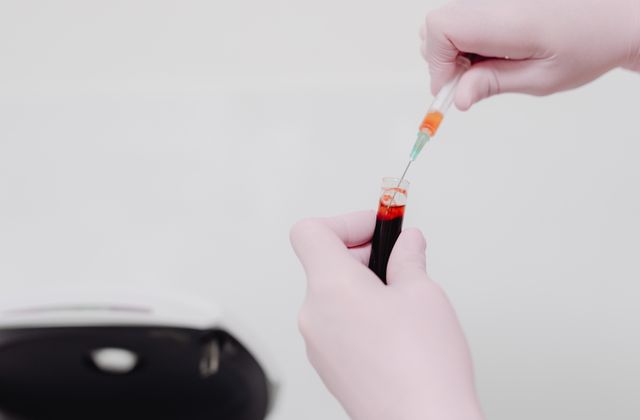

Key takeaways
- The anti-HBs titre is a protection test, not an infection test. It measures the antibodies that neutralize hepatitis B, whether they came from the vaccine or a cleared past infection.
- 10 mIU/mL is the cut-off most laboratories treat as protective. Ranges vary by laboratory, so compare your number only against the range printed on your own report.
- Test 1 to 2 months after the final vaccine dose. A titre below 10 after a completed series usually means revaccination, not panic, and the timing of the draw matters.
- Anti-HBs positive with HBsAg negative means immunity, not infection. Anti-HBc antibodies are never produced by the vaccine, so they reveal a past real infection.
- In healthy adults who responded to the vaccine years ago, a faded titre below 10 usually does not mean lost protection. Immune memory persists, and routine boosters are not recommended.
- No fasting is needed. Free home collection runs across Malad, Kandivali, Borivali and Goregaon, reports usually arrive in about 24 hours, and the lab is open 24x7.
Book tests from this article
Sample collected at home - free
- Anti - Hepatitis B Surface antibodies (Anti - HBs titre)
₹949₹1,24924% off
- Anti Hepatitis B Core Antibody (AHBc) - Total
₹1,249₹1,64924% off
- HBsAg (Hepatitis B Surface Antigen)
₹499₹79938% off
Free collection 24 hr reports
The one number you came for
Your report has a number on it, measured in mIU/mL, and you want to know if it's a pass or a fail. Here is the short answer the long article will unpack: most laboratories treat 10 mIU/mL and above as protective, and below 10 as "not quite enough." That cut-off comes from CDC and WHO guidance, and every major assay manufacturer calibrates against it. Your own report's reference range is still the final word, because ranges vary by laboratory, but the 10-line is the one doctors look for first.
Everything below explains why that line exists, what sits on either side of it, and what to actually do with your number.
It also helps to know what the number isn't. It isn't a grade on your immune system, and a higher number doesn't mean "more protected" in any practical sense. Once you're above the line, you're above the line; a titre of 400 doesn't buy you anything a titre of 40 doesn't. Doctors treat this test as a threshold, not a leaderboard.
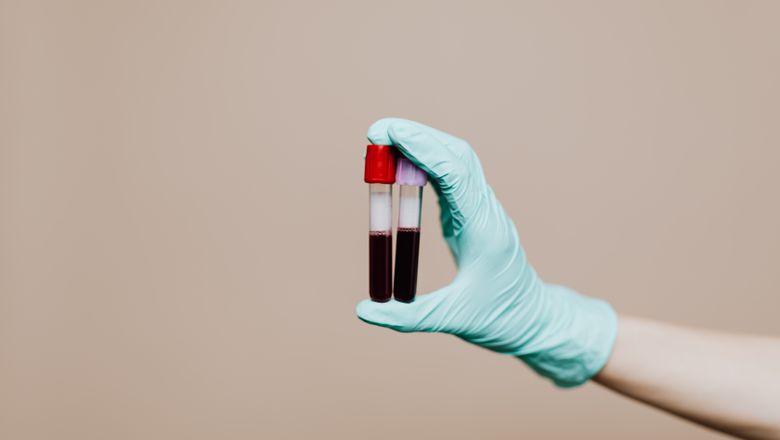
What the vaccine card can't tell you
A vaccination card says what you did. It says three shots, spaced over six months, dates recorded in someone else's handwriting. What it cannot say is what your body did with them. Most people's immune systems take the vaccine's surface protein, learn it, and build antibodies. A small minority don't respond properly. Older adults, smokers, people with kidney disease or poorly controlled diabetes, and people with advanced HIV are among those more likely to end up with weak or no response. WHO's own technical documents list exactly these host factors.
The anti-HBs titre test bridges that gap. It doesn't check whether you were vaccinated. It checks whether the vaccination, or a past infection your body cleared, actually left you protected. A card is a promise of protection. The titre is the proof.
This distinction matters most for people whose jobs or lives keep them close to blood: nurses, lab technicians, phlebotomists, dialysis patients, partners of someone living with hepatitis B. For them, "probably fine" isn't good enough. A number is.
There's a second, quieter reason the card falls short: records get lost. Cards get thrown out during moves, clinics close, childhood immunization registers go missing. India introduced the hepatitis B birth dose and the pentavalent schedule years ago, but plenty of adults vaccinated as children have nothing on paper to prove it. For them, the titre test isn't checking the vaccine's work; it's reconstructing a history nobody wrote down. A positive result closes the case. A negative one simply means starting fresh, which at adult dosing is three straightforward shots.
The three markers your doctor is actually comparing
Anti-HBs almost never travels alone. Doctors usually read it next to two siblings, and the three together tell a complete story. Here's the plain version:
- HBsAg (hepatitis B surface antigen): the virus's own coat protein. If it's in your blood, the virus is there too. This is the infection test.
- Anti-HBs (the antibody, your test): your immune system's response to that coat. This is the protection test.
- Anti-HBc (core antibody): antibodies against the virus's inner core. The vaccine contains only the surface protein, so the vaccine can never produce anti-HBc. Only a real infection can. This is the "did the real virus ever visit" test.
Now the combinations, straight from CDC's interpretation tables:
- All three negative: susceptible. Never infected, never vaccinated (or the vaccine didn't take). Offer vaccination.
- Anti-HBs positive, the other two negative: immune because of vaccination. This is the result most tested adults are hoping for.
- Anti-HBs and anti-HBc positive, HBsAg negative: immune because you fought off a real infection in the past.
- HBsAg positive: infected, whether recent or long-standing. The IgM flavor of anti-HBc helps sort acute from chronic, and this is firmly doctor territory.
- Only anti-HBc positive: the ambiguous one. It can mean a resolved infection whose anti-HBs has faded, a false-positive core result, or, rarely, an occult infection. It needs a doctor's read, not a search engine.
Notice the first two rows. A positive anti-HBs with a negative HBsAg means immunity, not infection. Patients ask us this at the counter almost weekly, and the confusion is understandable: "positive" sounds like something is wrong. On this test, positive is the goal, and the other two markers are what tell you how it got there.
Your report, row by row
A typical anti-HBs report has five lines. Let's walk them.
The test name usually reads "Anti-HBs (quantitative)" or "Anti-HBs titre." Quantitative matters. A qualitative version just says reactive or non-reactive. The titre version gives you the actual number in mIU/mL, which is what you want when the whole point is comparing against the 10-line.
The result is your number. Reports in Mumbai commonly show values anywhere from under 2 to over 1,000 mIU/mL. Numbers above 1,000 often get reported as ">1000" because the assay tops out there; that just means strongly positive.
The reference range is the lab's own ruler. Expect something like ">= 10 mIU/mL: Positive/Immune" and "< 10 mIU/mL: Negative/Non-immune." Some labs use "Reactive" and "Non-reactive" instead. Compare your number only against the range printed on your page.
The method line might say chemiluminescence (CLIA) or ELISA. Different machines, same idea: they measure how much antibody is in the serum. The units, mIU/mL, trace back to a WHO international standard, which is why results are broadly comparable between labs even though each lab sets its own exact wording.
The flag or interpretation is the lab's verdict: immune, non-immune, equivocal. If your lab marks anything "equivocal" or "borderline," it means the number landed right on the fence, and a repeat test after a few weeks is usually the next step.
None of this involves fasting, special preparation, or timing around your day. The sample is a standard venous blood draw. You feel the quick sting, the phlebotomist tapes a cotton ball to the crook of your arm, and you're done in two minutes.
A high titre: good news, with one footnote
If your number sits comfortably above 10 mIU/mL, you're in the position the test was designed to confirm. The vaccine did its job, or your body cleared an old infection and kept the receipts. Either way, you carry circulating antibodies that can neutralize the virus on contact.
What a high number does not tell you is which route got you there. The assay itself cannot separate vaccine-made antibodies from infection-made ones. That's where anti-HBc steps in. If you've never knowingly had hepatitis B and your anti-HBc is negative, the immunity came from the shots. If anti-HBc is positive too, you cleared the real thing at some point, and you should mention that history to your doctor because a resolved infection carries a small reactivation risk under strong immunosuppression. Your anti-HBc total result is what settles this.
One more footnote, for the very high numbers. Titres in the hundreds or above a thousand are common after recent vaccination and are simply strong responses, not something wrong. There is no recognized "too high" for anti-HBs. Doctors don't treat a high titre; they file it as a pass.
A low titre: the honest version of what under-10 means
This is the result that worries people, and it deserves a careful read. A titre below 10 mIU/mL after a completed vaccine series means your protection sits under the level laboratories consider adequate. It does not mean the vaccine "failed" in a moral sense, and it does not mean you're sick. It means the number isn't where it should be, and the standard next step is straightforward: revaccination.
CDC and ACIP guidance is specific here. Adults who don't reach 10 mIU/mL after the primary series should go through a full second series on the proper schedule, then retest 1 to 2 months after the final dose. A single booster followed by a quick recheck sounds tempting, but the guidance favors completing the whole second series first. Mayo Clinic Laboratories notes that ACIP doesn't recommend more than two full vaccine series for non-responders, so if a second series still doesn't take, the conversation shifts: the person is considered susceptible and counseled about avoiding exposure and getting HBIG (hepatitis B immune globulin) after any known exposure, rather than endless repeat shots.
A low number can also mean something duller: you tested too early, before the antibodies had finished building. The 1-to-2-month window after the final dose exists because the immune response keeps maturing for weeks. Test at two weeks and you can get a number that misrepresents you. If your timeline looks like this, the honest fix is to wait and retest, not to revaccinate immediately.
Take the report to your doctor either way. "Below 10" is a fork in the road, and which fork applies depends on your vaccination history, your timing, and your risk profile.
Why a faded number isn't always fading protection
Here is the part almost nobody expects. If you completed the vaccine series years ago, responded well at the time, and your titre has now drifted below 10, you are probably still protected. This isn't guesswork.
CDC's own data show that most vaccine responders remain immune decades later even after their anti-HBs falls under the cut-off, because immune memory cells persist and can ramp antibody production back up within days of a real exposure. WHO's training materials put the figure plainly: over 90% of people who responded to the vaccine stay protected for at least 30 years, whether or not the antibody is still detectable.
That is why neither CDC nor WHO recommends routine boosters or repeated titre checks for healthy, immunocompetent adults who completed the series and responded. The number on a report is a snapshot of circulating antibodies; the protection lives partly in memory cells that don't show up on the snapshot.
The exception matters, so let's name it. People on dialysis, people with HIV, transplant recipients, and others with weakened immunity are told to check titres periodically (often yearly) and get boosted when they dip, because their immune memory is exactly what's compromised. Healthcare workers with ongoing blood exposure also fall into the test-and-keep-up group. If you belong to either group, your doctor's schedule overrides the general reassurance above.
So the rule is really two rules: responded back then and healthy now, and a faded number is not an emergency. Never properly documented as responding, or in a high-risk group, and the number deserves attention.
Who actually needs this test
Routine post-vaccination testing is not recommended for everyone. CDC is explicit: ordinary adults and children who completed the routine series don't need their immunity checked. The test earns its keep when someone's medical management depends on the answer.
The groups that typically get tested:
- Healthcare and public-safety workers with ongoing exposure to blood or body fluids. Hospitals in Mumbai routinely ask new clinical hires for this number.
- People on hemodialysis, and people with HIV or other immunocompromise, whose management changes if the titre is low.
- Partners of someone who is HBsAg-positive, where the result decides revaccination and additional precautions.
- Infants born to HBsAg-positive mothers, tested 1 to 2 months after finishing their vaccine series (along with HBsAg) to confirm the prevention worked.
- Adults starting the series late, especially those who can't quite remember whether they ever finished it. A negative titre plus negative HBsAg is a clean signal to just get vaccinated.
Then there's the large unofficial group: adults who found their old vaccine card, did the arithmetic on how many years have passed, and want reassurance. Nothing about that is wrong. The test is a simple blood draw, no fasting, and it answers the exact question keeping them up. Our lab sees this pattern constantly around job medicals and pre-travel checkups, when someone suddenly needs documented proof of immunity.
Timing it right after your last dose
The window matters more than people think. Testing 1 to 2 months after the final dose of the series is the recommendation across CDC, ACIP, and the Pink Book. Earlier than that, the antibody response is still climbing and the number can understate your true protection. Later than that is fine for a one-time check, though if months or years have passed and you're a healthy responder, remember the faded-number discussion above: a lower reading doesn't automatically mean lost immunity.
Two timing traps catch people out:
First, testing right after a booster. The number shoots up fast, but the early spike partly reflects the immediate response, not the settled level. Give it the same 1 to 2 months.
Second, testing after hepatitis B immune globulin (HBIG). HBIG is a dose of ready-made antibodies given after exposures or to newborns of HBsAg-positive mothers, and it puts anti-HBs in your blood for 4 to 6 months. Test inside that window and the result reflects the borrowed antibodies, not your own. CDC advises waiting past six months.
For babies, the schedule is tighter and more specific. India gives a hepatitis B birth dose within 24 hours, then the pentavalent vaccine (which includes hepatitis B) at 6, 10, and 14 weeks. Babies born to HBsAg-positive mothers also get HBIG, ideally within 12 hours of birth. Their post-vaccination testing happens 1 to 2 months after the final dose, and not before 9 months of age, partly to let the HBIG wash out and partly because HBsAg from the vaccine itself can show up transiently.
Adults doing the series fresh follow the familiar 0, 1, and 6 month spacing. Mark the calendar: the titre check belongs 1 to 2 months after that sixth-month shot, not the week after.
The two quirks that can fool a result
Quirk one: HBsAg can turn positive right after vaccination. The vaccine contains the surface antigen itself, so a hepatitis B surface antigen test drawn within days of a shot can pick up the vaccine's antigen and flash positive. FDA documentation describes transient positivity up to 18 days in adults and 21 days in neonates, and recommends deferring HBsAg testing for about four weeks after a dose. So if someone gets vaccinated and then screened for a job medical a week later, a positive HBsAg alongside a negative anti-HBc and negative HBV DNA is far more likely to be the vaccine talking than an infection. The fix is simple: note the vaccination date, wait, and retest.
Quirk two: qualitative versus quantitative. Some panels report anti-HBs as just reactive or non-reactive. That's fine for a yes/no question but useless for the "how immune" question, and it can't be compared against the 10 mIU/mL line. If your goal is to document protection for a hospital, a dialysis unit, or your own peace of mind, order the quantitative titre specifically. This sounds obvious, but mixed-up orders are one of the most common reasons we redraw samples.
There are also the ordinary assay gremlins: very high biotin intake can interfere with some immunoassays (FDA has flagged this for lab tests generally), and any single unexpected result deserves a repeat before anyone acts on it. Laboratories are used to this; nobody will blink if you ask.
Before the needle: dos and don'ts
The preparation list for this test is mercifully short. Still, small details trip people up, so here they are.
Do:
- Do book any slot that suits you. Anti-HBs levels don't move with meals, so morning, afternoon, or an evening home collection all work.
- Do carry your vaccine card or any old hepatitis reports to the appointment. The person drawing your blood doesn't need them, but your doctor will want the history when interpreting a low number.
- Do mention recent vaccinations, HBIG, or blood transfusions when you book. The first two directly affect what the result means, as the timing section explains.
- Do ask for the quantitative titre if your goal is documenting immunity. "Anti-HBs" alone might come back as a simple reactive/non-reactive.
- Do drink water and keep the arm relaxed. Hydration makes veins easier to find, and a relaxed arm makes the draw quicker.
Don't:
- Don't fast for this test. It isn't a sugar or lipid test, and skipping breakfast buys you nothing.
- Don't test within days of a hepatitis B shot if you can avoid it, especially if an HBsAg result matters to you (job medicals, dialysis screening).
- Don't read a low number as a diagnosis of anything. Read it as a question to take to your doctor, not an answer.
- Don't pay for repeat titres every year "just to be safe" if you're a healthy adult who responded to the series. The guidelines are clear that this adds cost without adding protection.
Booking, bundles, and the box on your screen
Ordering is the easy part. The anti-HBs titre test is a single blood sample. Book on 84250 40353, and a phlebotomist arrives with the kit, finds a vein, fills one tube, and tapes the cotton ball down.
The lab runs 24x7, so night-shift workers and odd schedules aren't a problem. Home collection is free across Malad, Kandivali, Borivali, and Goregaon, and reports usually land in about 24 hours.
If the reason you're testing is bigger than one number, consider the panel instead of the single test. The Hepatitis Screening Panel - Standard wraps the hepatitis markers together, which suits pre-employment medicals, pre-travel checkups, and anyone whose doctor asked for "the full hepatitis picture." The single titre stays the right choice when the only question is whether your vaccine took.
A few natural companions, depending on your situation. If an old HBsAg result or an unclear history is in the mix, the HBsAg test settles whether the virus itself is present. If you want to know whether your immunity came from the vaccine or a cleared infection, add the anti-HBc total test. And if the reason you're screening is broad, say a new job's medical panel, the hepatitis C antibody test covers the other common blood-borne virus in one more tube. Browse the full packages page if a wider checkup is what you actually need, or the tests page for the complete menu.
One last practical note. Never invent prices from memory when planning; the test and package pages carry live pricing, which is the only number that counts.
What happens to your blood after the draw
Most people never think about this part, but it explains why the report takes about a day. Your tube travels to the lab, where the serum is separated by spinning it in a centrifuge. The serum goes onto an automated immunoassay analyzer, usually a chemiluminescence platform. In plain terms, the machine mixes your serum with lab-made hepatitis B surface protein and a marker that lights up when antibodies bind. The more of your antibodies that latch on, the brighter the signal, and the machine converts that brightness into your mIU/mL number using a calibration curve built from the WHO international standard.
This is also why a result is a number and not a guess. Every run includes control samples with known antibody levels. If the controls drift, the run fails and your sample gets retested rather than reported. When the report says 47.3 mIU/mL, that decimal came from a machine that checked itself before it checked you.
The human part matters too. Before the number leaves the lab, a pathologist or authorized signatory reviews flagged results: very low numbers in healthcare workers, unexpectedly high numbers, anything inconsistent with the clinical notes on the request form. A surprising result sometimes triggers a reflex suggestion, like adding HBsAg or anti-HBc, because a titre alone occasionally raises a question only the sibling markers can answer.
One more detail worth knowing: serum for this test keeps well. If the lab needs to repeat the assay or add a marker, they can usually do it from the same tube within a few days, which is why repeat requests rarely mean a second needle.
The guidelines cover the official list. Real life adds its own cast of titre-test seekers, and we see these patterns constantly at the lab.
A few of the most common:
The returning professional. Nurses and doctors trained abroad come back to Mumbai hospitals and get asked for documented immunity. Their home country gave the shots; the new employer wants the number. One tube, one number, file closed.
The pre-travel checkup. Some countries and some employers, especially in healthcare and food handling, want hepatitis B immunity on record before a visa medical or a posting. Travelers usually discover this two weeks before departure, which is exactly why the timing section exists: test early enough to act on a low result.
The new parent. Parents of a newborn sometimes realize, mid-pediatrician-visit, that nobody ever checked their own status. Since hepatitis B can pass from mother to child at birth, obstetricians screen mothers with HBsAg, and an anxious partner often orders their own titre the same week. A clean anti-HBs result is genuine reassurance during a month that has enough worries already.
The dialysis patient. People starting long-term dialysis get screened because the unit needs to know who's protected and who needs the vaccine series before exposure risk accumulates. This is also the group where doctors watch titres yearly and boost when they fade, since immune memory can't be assumed.
The "I think I had it" adult. Someone remembers a bout of jaundice decades ago, or a family member who carried the virus. Their panel often comes back anti-HBs positive and anti-HBc positive: a cleared past infection, immunity earned the hard way. The useful next step is simply telling their doctor, because that history changes how future immunosuppressive treatments get planned.
The careful skeptic. Vaccinated, healthy, no particular risk, but wants proof. This is a legitimate reason too. The test is cheap, the draw takes two minutes, and certainty has its own value. Just don't turn it into an annual ritual; the guidelines say the one documented result stands.
Reading your number next to your history
A titre is never interpreted in a vacuum. The same 8 mIU/mL means different things in different bodies, and this is where the conversation with your doctor earns its keep.
Tested one month after your third dose and got 8: you're likely a slow responder, or the draw was simply early. Retest at the right interval before anyone talks revaccination.
Completed the series fifteen years ago, responded well back then, now reading 6: you're almost certainly still protected through immune memory. No booster needed, no panic warranted, unless you belong to one of the groups that gets monitored.
Never vaccinated, HBsAg negative, anti-HBs 4: you're susceptible and unprotected. That's actually the simplest outcome. Start the vaccine series. The test did its job by catching the gap.
Healthcare worker, documented non-responder after two full series, titre 3: you're in the small group the guidelines describe as susceptible despite vaccination. The plan shifts from more shots to precautions: strict exposure prevention and HBIG after any known exposure. Your occupational health doctor will know this protocol by heart.
Received HBIG four months ago after a needlestick and now reading 120: that number is borrowed immunity, not yours. Wait out the six-month window and test again for your true baseline.
The pattern across all five: the number plus the story equals the meaning. A report without history is half a sentence. When you book, and especially when you show the result to your doctor, bring the timeline: when were the shots, which doses, any HBIG, any known exposures, any immune conditions. Five lines of history turn a confusing number into a clear decision.
If there's one sentence to carry away from this whole guide, it's this: the anti-HBs titre doesn't judge your past, it documents your protection. Whether the number says you're covered, says you need a booster, or says the vaccine never took, each outcome has a clear, well-trodden next step. That's the real value of the test. Not the number itself, but the decision it lets you make with confidence.
References
- CDC, Chapter 10: Hepatitis B, Epidemiology and Prevention of Vaccine-Preventable Diseases (Pink Book): postvaccination serologic testing guidance, ≥10 mIU/mL protective concentration, revaccination protocol.
- CDC, Clinical Testing and Diagnosis for Hepatitis B: three-marker interpretation, anti-HBc never produced by vaccination, waning anti-HBs with persistent immune memory, HBIG interference window.
- WHO, Training workshop on hepatitis B and hepatitis C screening, diagnosis and treatment (SEARO): ≥10 mIU/mL protective cut-off, >90% of responders protected ≥30 years, no routine boosters.
- Mayo Clinic Laboratories, Hepatitis B Virus Surface Antibody Screen, Qualitative/Quantitative, Serum (test catalog): ≥10.0 mIU/mL adequate immunity per assay instructions and CDC guidance, ACIP limit of two vaccine series for nonresponders.
Book these tests at home
Live prices · free home sample collection in Malad, Kandivali, Borivali & Goregaon
Anti - Hepatitis B Surface antibodies (Anti - HBs titre)
- Report in 24 hrs
- Free home collection
Anti Hepatitis B Core Antibody (AHBc) - Total
- Report in 24 hrs
- Free home collection
HBsAg (Hepatitis B Surface Antigen)
- Report in 24 hrs
- Free home collection
Anti HCV (Hepatitis C Antibody)
- Report in 24 hrs
- Free home collection
More tests related to this topic
Other Liver tests you can book with free home sample collection.
24 hour Albumin creatinine ratio (ACR)
- Report in 24 hrs
- Free home collection
Alanine Transaminase (SGPT)
- Report in 24 hrs
- Free home collection
Albumin
- Report in 24 hrs
- Free home collection
Albumin creatinine ratio (ACR) - Spot sample
- Report in 24 hrs
- Free home collection
Alkaline Phosphatase
- Report in 24 hrs
- Free home collection
Alkaline Phosphatase Isoenzymes Electrophoresis, Serum
- Report in 24 hrs
- Free home collection
Anti HCV IgM
- Report in 24 hrs
- Free home collection
Anti Hepatitis A Virus (ANTI HAV) - IgG
- Report in 24 hrs
- Free home collection
Anti Hepatitis A Virus (ANTI HAV) - IgM
- Report in 24 hrs
- Free home collection
Anti Hepatitis B Core Antibody (AHBC) - IGM
- Report in 24 hrs
- Free home collection
Anti Hepatitis B Envelope Antibody (AHBe) - Total
- Report in 24 hrs
- Free home collection
Anti Hepatitis C Virus (HCV) - Total
- Report in 24 hrs
- Free home collection
Get more from the same visit
Health packages that already include these tests, and tests people usually add.
Frequently asked questions
Do I need to fast before the anti-HBs titre test?
No. Unlike blood sugar or lipid tests, anti-HBs levels are not affected by food. Eat normally and book any slot that suits you, including an evening home collection.
How long after my last vaccine dose should I get tested?
One to two months after the final dose, when the antibody response has had time to build. Testing earlier can give a misleadingly low number. If you tested too early, the fix is usually to wait and retest, not to revaccinate.
My titre came back below 10 mIU/mL. What should I do?
Do not panic and do not ignore it. It means your protection is below the level most labs treat as adequate. Take the report to your doctor, who will usually recommend completing a second vaccine series and retesting 1 to 2 months after its final dose. The exact next step depends on your history and timing.
Does a positive anti-HBs mean I have hepatitis B?
No, it usually means the opposite. Anti-HBs is the protective antibody. HBsAg, a different test, is the one that detects the virus itself. Positive anti-HBs with negative HBsAg means immunity, not infection.
I was vaccinated as a child and my titre is low now. Do I need a booster?
Probably not, if you are healthy. CDC and WHO guidance says people who responded to the vaccine series keep immune memory for decades, even after the measurable antibody fades below 10. Routine boosters and repeated titre checks are not recommended for immunocompetent adults. People on dialysis, with HIV, or on immunosuppression are the exception and should follow their doctor's schedule.
What is the difference between anti-HBs and HBsAg?
HBsAg is the virus's surface protein; finding it in blood means the virus is present. Anti-HBs is your immune system's antibody against that protein; finding it means protection. One detects infection, the other measures immunity.
My anti-HBc is also positive. What does that change?
It means your immunity came from fighting off a real hepatitis B infection in the past, not from the vaccine alone, since the vaccine never produces anti-HBc. You are still immune, but mention this history to your doctor because a resolved infection carries a small reactivation risk under strong immunosuppression.
Can this test tell whether my immunity came from the vaccine or a past infection?
Not by itself. The anti-HBs assay cannot distinguish vaccine-made antibodies from infection-made ones. An anti-HBc total test settles it: negative means the vaccine, positive means a past infection.
I got a hepatitis B shot last week. Can I test now?
Wait. Test 1 to 2 months after the final dose of the series. Testing within days of a shot can also make an HBsAg test turn falsely positive, since the vaccine contains the surface antigen itself. Note your vaccination date and give it time.
How long does an anti-HBs report stay valid?
For a healthy adult with a documented protective result, the result stands indefinitely; guidelines do not ask for periodic retesting. Hospitals and dialysis units may still ask for a fresh number for their own records, and immunocompromised patients are usually rechecked yearly.
HWP Diagnostic Editorial Team
Health guides written by the team at HWP Diagnostic, Mumbai, to help you understand your tests before you book. This article is for general education and is not a substitute for medical advice - reference ranges vary between labs, so always discuss your results with your doctor. Read our editorial policy. Photos: Pexels.